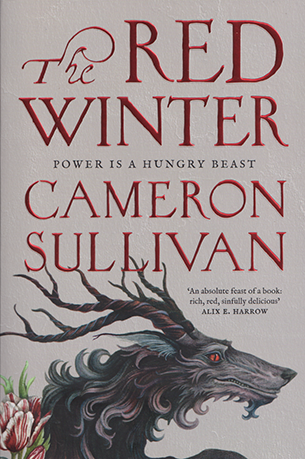
- Category:Australian Fiction, Fantasy Fiction, Horror Fiction, Historical Fiction
- Date Read:16 April 2026
- Year Published:2026
- Pages:531


The Red Winter is a mash-up of historical fiction, fantasy and horror. Loosely based upon real events from eighteenth-century France, Cameron Sullivan’s novel centres on the hunt for a monstrous creature that embodies the violence and energy of the coming revolution that will overturn France’s ancien regime.
The story is told from the viewpoint of Professor Sebastian Grave, a man inhabited by an ancient spirit, Sarmodel, who has kept Sebastian alive since the days before the Roman Empire. But the perspective is modern. Sebastian is writing in 2013, his memories prompted by an old brooch he has rediscovered in his possession containing a cameo portrait from the period of the main story. Sebastian makes heavy use of footnotes to begin with, to help explain his world, written in a light style reminiscent of Terry Pratchett. Sebastian is witty and sometimes his tone is snarky. His footnotes reveal that he has his own website and sometimes he addresses the reader directly, telling us to look up information on Google, or to go back to our online shopping, mildly contemptuous of our ignorance. But the feeling I had as I read the first few chapters of this book was one of fascination. Sebastian can talk to the dead, perform services to help them pass, and is immersed in a world of spirits and subtle magic operating just below the awareness of our own reality. All standard fantasy fare, I know. But he is also a traveller through our own history and he was a character I wanted to get to know.
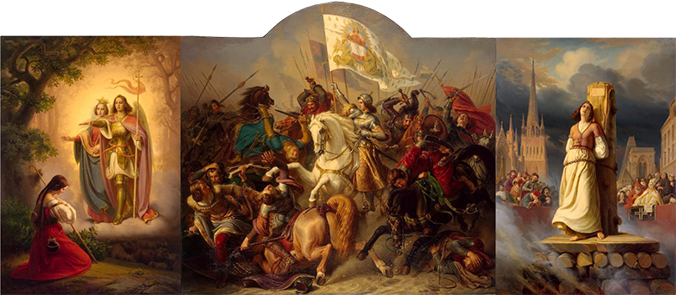
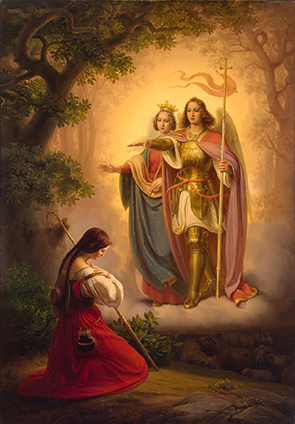
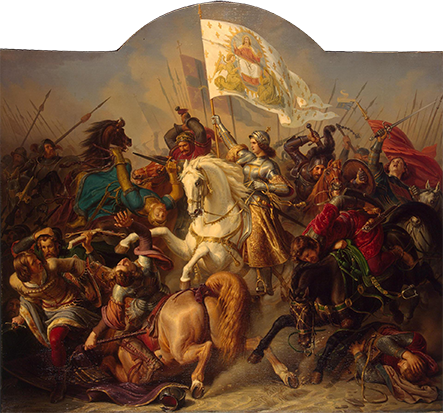
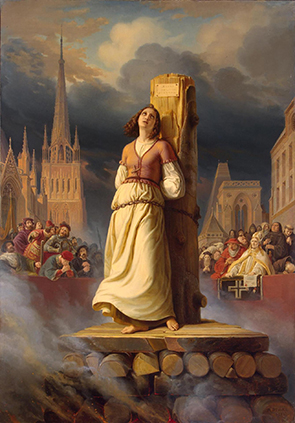
Yet as modern as Sebastian might now be his narrative has its chronological beginnings in the story of Joan of Arc, the Maiden of Orleans, who claimed to be divinely inspired by the archangel Michael. She helped break the English siege of Orleans in 1429. In Sebastian’s world, over four centuries later, the consequences of her execution by fire manifest in the province of Gévaudan, where a terrible creature known as the ‘Beast’ has killed over a hundred people, many of whom it has partially devoured.
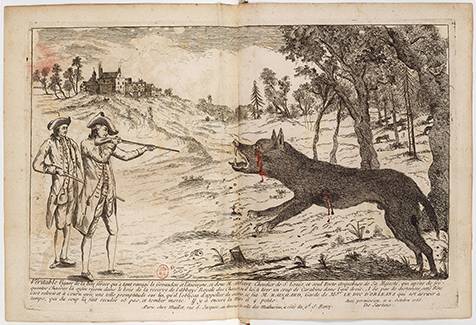
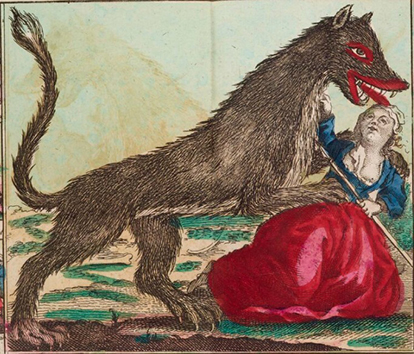
So much of the narrative echoes moments of historical record. The story of the Beast of Gévaudan, which produced many accounts of a ferocious beast attacking hundreds of people over a period of three years, is foremost. For instance, one account occurred on 11 August 1765 when Marie-Jeanne Vallet, a 20-year-old servant, was walking with other peasant girls when a large animal appeared. It had a threatening demeanour. As the young women stepped away from the creature it attacked Marie-Jeanne. It is likely the women were nominally involved in a great hunt being conducted for the beast that day, since Marie-Jeanne had a spear to hand. The hunt had been organised by François Antoine who had been appointed by Louis XV of France to take over the search for the creature that had been killing people and terrorising the countryside around Gévaudan. When the creature attacked, Marie-Jeanne impaled the animal. It escaped but Marie-Jeanne gained some notoriety as the ‘Maid of Gévaudan’ for her plucky spirit. Her contemporaries were literally comparing her to that more famous young maiden who had become known to history as ‘Joan of Arc’ after she helped break the siege of Orleans.
(As an aside, ‘Antoine’ is the name of an important character in The Red Winter, although the part he plays is completely different to the historical François Antoine. Antoine is Sebastian’s lover, while the part played by the historical Antoine is taken by Lord Bauterne in the novel. Bauterne has been appointed to lead the hunt for the Beast by King Louis, replacing Jean-Charles d’Ennerval and his son Jean-Francois d’Ennerval who come to rival Bauterne in Sullivan’s version of the story. The d’Ennervals are also names taken from history. They replaced Captain Duhamel as leaders of the hunt, but were in turn replaced by François Antoine. Other names from history, like Jean Chastel, who was credited with finally killing the Beast, are dramatical transformed. Sullivan’s Jean Chastel is a publican whose fate far less noteworthy. So, The Red Winter is based on history even though it plays fast and loose with its details.)
The connection made between Marie-Jeanne and Joan of Arc by Marie-Jeanne’s admiring contemporaries is therefore interesting, although she plays no role in the narrative. It’s interesting because Cameron Sullivan also makes a fictional connection between Joan of Arc and the Beast of Gévaudan, as it had become known. But the connecting tissue between these seemingly disparate moments in history, separated by centuries, is Cameron’s protagonist, Sebastian, with his long life. Sebastian had a part to play around the events of Joan of Arc’s execution (she is known as Jehanne d’Arc in the novel. She was known by various names, but certainly not as ‘Joan of Arc’ in her lifetime). The historical ‘Joan’ claimed to have been divinely inspired by the archangel Michael. Sullivan capitalises upon this since he is already playing with demons, spirits and ghosts, and it turns out that Jehanne is, in fact, inhabited by a spirit who has mentored her and helped her gain her notoriety. Her untimely death and the fate of that spirit are the catalyst for the events that happen hundreds of years later in France, as hunters from across France respond to the king’s calls to have the Beast tracked down and killed.
So, the novel is only loosely based upon the eighteenth-century hunt for the beast, which in reality seems to have been at least two animals, possibly more, likely large wolves, since the killing of two large wolves seems to have been the concluding blows that finally halted the attacks that had been terrorising the region of Gévaudan. Over a hundred people had been killed, some of whom had been partially eaten. Sullivan meshes together this real history and his fantasy quite nicely and takes liberties with the historical timeline to produce what is also, nominally, historical fiction, even if some of its key events are entirely made up. The large wolves of history are adapted to his fantasy version, and what was a series of historical attacks a quarter of a century before the outbreak of the French Revolution are brought within four years of the storming of the Bastille by Sullivan. There is a supernatural energy to the attacks which is not only horrific in the detail of torn bodies and hearts consumed whole, but represents a transgressive impulse underlying French society at this time, which was highly socially stratified. At the top are noble families like that of Jacques d’Ocerne who seeks Sebastian’s help against the Beast, but also the likes of the Bishop of Mende who represents the pinnacle of French society in this region, with a pecking order of barons and other nobles denoted by their place at the table, and at the bottom by characters like Lorette who plot against all this privilege. Mende may continue to enjoy his fine clothes and adornments for now, but we know it is men like him whom the revolution will later tear down.
I hope to make it clear, so here it is one last time: the overall experience of reading this book is not burdened by a weight of historical detail. History is a loose frame upon which Sullivan hangs his story. Rather, it is the smell of blood, the hunger of the Beast and forbidden desires, that are impressionable. Because this story triggers something primal beyond desire and hunger. The self is no longer an inviolable entity when it can be torn apart so randomly. Instead, the Beast exposes aspects of our humanity normally repressed. Its violence is horrific, not because it makes us fear death, but because it is literally visceral, with exposed hearts, blood and organs on display and eaten. It is not only our curiosity but a primeval impulse that keeps us reading. The fear is primal because it transgresses the barriers society, class and laws have erected against our natural selves, and conjures the atavistic fear of becoming prey – “meatbags” – or experiencing the transgressive allure of the hunt.
The story whips from one decade to another, from one century to another, slowly drawing the disparate plots together, but all the while racing at breakneck speed. Part Three, ‘The Massacre at Saint-Julien’, delivers on the promise of its title. It is a heart stopping encounter – ferocious, violent, gut-wrenching. Even so, for all its bloody spectacle, The Red Winter is never just gratuitously violent:
Shall I describe, one final time, a great slaughter?
Shall I give the account of yet more bloodshed in this already blood-drenched story of the Beast of Gévaudan?
I find I haven’t the heart for it.
Past fantasy, past horror, the story has a wider appeal for its panoramic (if somewhat bastardised-in-its-details) sweep of history. Despite it being fantasy it is historical fiction, too, because it has a broader understanding of the impulses and energy that fed the revolution when it finally occurred. Sullivan’s use of female characters underscores the gulf in class between the poor and men like the Bishop of Mende (also an historical figure). Female characters are either victims or they fight back in The Red Winter. Jehanne is remembered as a hero, but we see she has been used by a spirit she didn’t fully comprehend, as is Anna, a young girl tricked into making an ill-fated bargain with another spirit. Or they are women like Cecile, an herbalist with an insight into the spirit world, or Lorette who openly rails against the privileges of the upper classes, who acknowledge nothing of their servant-underlings’ privations. Lorette draws young men, even the noble Jacques, son of Antoine, to her cause with her beauty. Another minor female character, Rosalie Mimet, advocates for reason and science, the tenets of the Enlightenment that was the intellectual furnace for the revolutions of the period, against the faith of the Bishop of Mende.
But Sullivan’s use of the wolf as the avatar of change is the most consequential representation of the revolutionary impulse in the story. It is a representation that seems to draw inspiration from William Blake’s own response to the revolutionary impulses of his time. Blake wrote about the American and French revolutions specifically. Fans of Ridley Scott’s Blade Runner will be familiar with Roy Batty’s opening monologue to Hannibal Chew, the eye specialist working for the Tyrell Corporation, which is a quotation from Blake:
Fiery the Angels rose, & as they rose deep thunder
roll’d
Around their shores: indignant burning with the fires of
Orc
The monologue is from Blake’s America: A Prophecy. ‘Orc’, through its journey from Latin and Old English means a spirit or monster, and it is a force that arises from below, from hell or some other dark place. Blake’s Orc is the spirit of revolution, its roiling energy variously appearing as a serpent, an eagle, a lion and a whale. And Blake also associates the dying of the old regimes with the howling of the wolf, a representation of defeat, the last gasps of great powers swept aside. When Batty hunts Deckard in the final minures of Blade Runner, he howls like a wolf. He is the new world that threatens the old. That is what is also exciting about Sullivan’s bastardisation of history which might otherwise be read as little more than an entertaining fantasy: that it also represents something true and understandable to the modern world. That history can also be represented by vast forces that are not shackled to the minutiae of facts – Blake knew this – but tell an accessible truth about the experience of violent change and fear in troubled times.
So, The Red Winter is not only highly readable and entertaining, but is to be highly recommended.

The Beast of Gévaudan
Jehanne D’Arc
Joan of Arc was only an ordinary peasant girl when she began her journey towards heroism, martyrdom and later, sainthood. In The Red Winter she is known as Jehanne d’Arc, a name probably closer to how she was known in her own lifetime. She became famous because she claimed to be divinely inspired to lead the French to victory against the British who were besieging Orleans. She later suffered military defeats at the failed Siege of Paris in September 1429, where she was wounded, as well as the Siege of La Charité in November 1429. She was eventually captured in 1430, accused of heresy, and was burned at the stake in 1431 by the English.