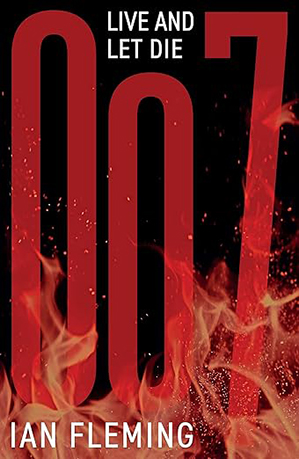
James Bond #2
- Category:Spy Thriller, Now a Major Motion Picture
- Date Read:10 February 2026
- Year Published:1954
- Pages:247


There are a lot of things to unpack when it comes to Live and Let Die, some of which are quite controversial and primarily centre on the themes of black culture, racism and stereotypes, superstition, and the language the novel utilises to tell its story. For clarity, I will be reviewing this novel from the perspective of a non-person of colour living in the modern day, but will make comparisons to other media and representations of the day to shed some light into the decisions and implications of James Bond’s second outing.
Following the disastrous ending to Casino Royale, Bond’s quest for revenge against SMERSH takes him to America’s Harlem in pursuit of Mr Big, or The Big Man. Born Buonaparte Ignace Gallia, Mr Big is now an underworld criminal mastermind who operates several clubs in Harlem where many 17th Century gold coins believed to have belonged to the pirate Henry Morgan have appeared in circulation. It is believed that Mr Big’s role is as an agent of SMERSH selling the gold to fund the Soviet organisation’s operations within America. As such, Mr Big enlists the loyalty of his Black Widow Voodoo Cult network through fear and superstition, utilising a heart disease that greys his skin to create the persona of a zombie who does the bidding of Lwa of the Dead, Baron Samedi.
Bond, reunited with his CIA friend Felix Leiter, journey into Harlem to recon Mr Big’s operations and to learn as much as possible about the area. This venture turns sour when Mr Big captures them both, and breaks one of Bond’s fingers as a warning. The pair escape, and flee to St. Petersburg along with Mr Big’s fortune-teller, Solitaire, whom Mr Big intends to wed to own her and her gift for discerning the truth in others. In Florida, Leiter and Bond scope out a bait and exotic fish warehouse where they are convinced Mr Big runs the gold through via his yacht, ‘Secatur’. However, the duo is dealt a blow when Solitaire is recaptured, followed up by Leiter’s mauling by Mr Big’s carnivorous fish. Desperate for vengeance, Bond travels to Jamaica, from where the ‘Secatur’ smuggles its treasure, hidden in the bottom of the tanks of his dangerous exotic fish.
After scuba-training with local fisherman Quarrel, Bond swims through barracuda and shark infested waters, and plants a limpet mine on the hull of the ‘Secatur’. However, his plans sour as the sailors chum the waters, causing the fish to frenzy. Bond finds brief respite inside a hidden chamber near the island where the ‘Secatur’ has docked, and discovers the million-dollar smuggling operation’s true extent. Finding Solitaire again, they are treated to the prospect of what is to come by Mr Big himself: to be dragged over the coral reef alongside the ‘Secatur’ as they depart, allowing the reef to tear them to shreds before the hungry frenzied fish devour the rest. Keeping quiet about the mine, Bond and Solitaire are moments away from hitting the reef when the limpet explodes, sending all aboard to a watery grave. The only survivor, a bloodied Mr Big, is devoured alive by the very fish he had relied upon to protect his treasure trove. With the treasure reclaimed and Mr Big’s Soviet ventures in America in turmoil, Bond and Solitaire take a much needed two-weeks’ “Passionate Leave”, as ordered by Head of MI6, M.
One of Fleming’s strengths from Casino Royale returns in the form of descriptions and observations of the world, albeit with one or two misses. I cannot understate just how brilliantly he is able to draw you into the world that Bond finds himself in, how vividly he paints a canvass of the setting via Bond’s personality-laden brush strokes. Harlem, St. Petersburg, and Jamaica come to life in unique and colourful ways; the humorous observations of Florida’s geriatric population and their mind-numbing boredom to death, the dichotomy of Harlem’s inclusive tourist locales and its less welcoming vibes in the spaces between, and Jamaica and the Isle of Surprise glows with a lush untouched element that is tarnished with a hint of Western development and over-saturation. It is very clear that Bond, and by extension Fleming, cares deeply for the environs in which they find themselves, and maintaining an understanding and appreciation for their past, present, and future.
The inspiration taken from historical figures or spiritual practices such as Voodoo lend themselves nicely to the themes of the novel and Bond’s journey. The way that Mr Big manipulates his own people through their spiritual beliefs, one of the few cultural links carried into the Western world, is both ingenious and deplorable. All this to fund an organisation that is Russian in origin makes it all the more interesting, but his portrayal is very clearly not a generalisation or stereotyping of black culture as a whole. The novel goes out of its way to emphasise how people of colour are finding ground and representation in the fields of science, politics, and humanitarianism, that unlike their portrayal within white circles that they are law-abiding people who seek to contribute to society just as much as anyone else. Several characters in Mr Big’s organisation are shown to have varying levels of belief in his power, and are not simply mindless lackeys at his beck and call. One scene has Felix forming a bond with his captor who, instead of badly injuring the CIA agent, simply knocks him out and drops him off at the hospital because they both recognise and respect each other. Bond’s deep respect for Quarrel and his intimate knowledge of fishing, deep sea diving and marine knowledge around Jamaica is highly emphasised as well, and these humanising elements go a ways to showing that Fleming was not too impressed with the negative portrayal of black people in the Western eye.
While the use of certain words is prevalent throughout the novel, they are never used as derogatory terms (or no “hard-r” as the saying goes) and are kept to general physical descriptions. The one chapter title that does fail that check however is in fact a reference to a novel of the same name published in 1926 during the Harlem Renaissance, which itself references and compares Harlem to segregated church balconies for African Americans during the 19th century. That being said, probably the biggest issue comes in the form of Fleming attributing accents to many of the black characters by abbreviating their dialogue. While it does not intend offence, the utilisation of this method of “world-building” can come across more stereotyping in the modern era, rather than the more likely reason for its inclusion. That being said, it does help to differentiate these characters from Mr Big whose dialogue sees no such alteration, making him appear more sophisticated, or rather separate from the people who he would claim to share much in common with. Solitaire’s dialogue is left unaltered. Additionally, Fleming has also utilised abbreviated dialogue for other characters, most notably the Russian SMERSH agent from Casino Royale, so if you can ignore these minor elements, you’ll still find plenty to enjoy in Live and Let Die.
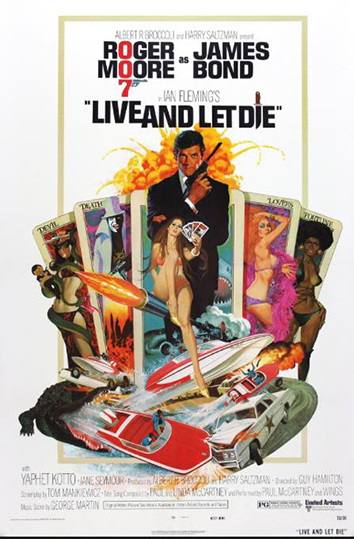
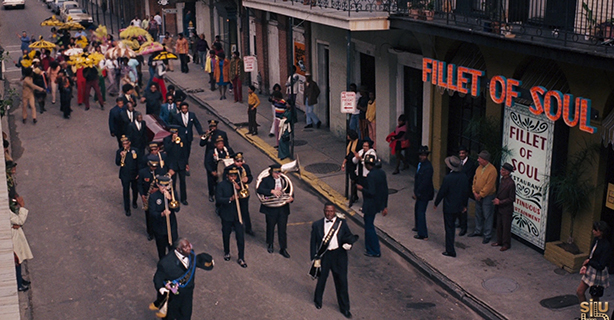
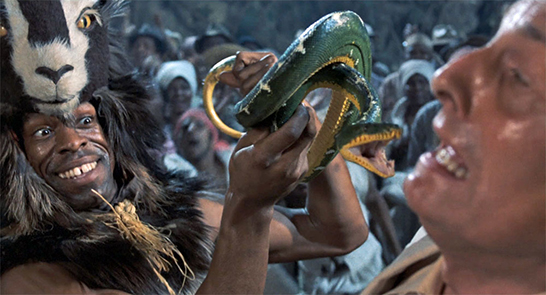
And so, we come to that section of the review where I draw comparisons to the film of the same name, which really only does share certain names of characters and locations and nothing more. This is mostly due to the great difference in time between the book’s setting of 1954 to that of the film in 1973, a nearly 20-year difference in which many major movements, cultural, historical, and political, had taken place concerning the rights and liberties of African Americans in particular. Given these rising tensions and developments around the issue of equality, even the changing perspectives of that more enlightened era, you’d expect that perhaps the filmmakers might tackle the themes found in Live and Let Die’s novel with a semblance of nuance and some dignity, as demonstrated in the original work. Quite obviously, this is not really the case as many of the more grounded elements of the novel are exaggerated to a level on par with the Blaxploitation genre of its day. While one might argue, given the over-the-top representation of cinema’s Bond (which would become even more exaggerated) that such an extreme was merely a parody of itself, its focus pertains mainly to African American culture and stereotypes in the film. Compare this to the general themes from other films in the series, such as giant space battles, henchmen with killer bowler hats or metal teeth, and a laser satellite — twice!
While the novel’s Mr Big is a reserved, secretive and cunning smuggler who disposes of his enemies via such unseemly means that it appears both natural and supernatural, the film’s Mr Big sells his emotions at every turn, needlessly disguising himself as Dr Kananga as part of the Voodoo ruse, utilising extremely conspicuous street funerals as methods of disposing of potential threats, involving hundreds of people at once, and even allegedly including an actual representation of Baron Samedi as part of his plans. While plenty of people may appreciate the more bombastic interpretation of the source material, I can’t help that a degree of meaning and relatability has been lost in translation. In attempting to emphasise the campiness, the film’s portrayal loses much in the way of symbolism, character, and even just plain sense. The bond of friendship between our protagonist and Felix Leiter, including the angst of coming so close to losing that connection, is stripped away to be repurposed for its own film later down the line. Leiter’s torture and near-death truly highlights Mr Big’s ruthless capacity for getting his own way and maintaining control over his cult, but even the movie version cannot allow Bond to break a finger to aid in that vision. Some changes are clearly for better representation of the times: the book has pirate gold being disseminated to secretly fund Soviet ops in America, while the movie features Mr Big’s plan to grow heroine so pure and distribute it for free initially until he corners the market and can take it all for himself. A much more relevant interpretation for the 70s to be sure, but the overlapping themes and motifs from the novel do come across as more of a parody and stereotype as a result. Depending on what flavour you prefer, the reasonable yet vibrant novelised take or the rollercoaster of exaggeration the film provides, you’ll come away entertained but at different costs.
Live and Let Die more than lives up to the promise of its predecessor, which says a lot considering it was actually drafted prior to Casino Royale. Despite the odd wince and awkward pang, it holds up well as a capsule of the era, as a surprisingly positive interpretation of black culture for the time, for adding additional layers to Bond, and just as a narrative to follow along to its bitter-sweet ending. Our next mission: Moonraker.
The James Bond Series
Greyed-out covers indicate a review is yet to be pubished for that book on this site



‘If Lieter’s interested and you don’t mind,’ said Bond, ‘I’d like very much to get up to Harlem this evening and have a look around. Might help to have some idea of what it looks like in Mr Big’s back yard.’
Dexter reflected.
‘Okay,’ he said finally. ‘Probably no harm. But don’t show yourselves too much. And don’t get hurt,’ he added . ‘There’s no one to help you up there. And don’t go stirring up a lot of trouble for us. This case isn’t ripe yet. Until it is, our policy with Mr Big is “live and let live”.’ Bond looked quizzically at Captain Dexter.
‘In my job,’ he said, ‘when I come up against a man like this one, I have another motto. It’s “live and let die”.’