▼ Blog
16 April 2026

This is not censorship
Early in the life of this website, back in April 2017, Victoria wrote a review for J.D. Vance’s Hillbilly Elegy. As Australians, we had never heard of J.D. Vance before the success of his book, but we were certainly interested in how someone who had made a success of themselves from an area supportive of Trump explained the world he grew up in, and why he thought the culture had reached a point that it could elect a person like Trump.
After a discussion with Victoria this morning, the review has become the first-ever I’ve removed from this website. We agreed we would both feel more comfortable with it gone. Certainly, the tenor of Victoria’s discussion of Vance was very different in April 2017 than what she would write if she had reason to, now. Now, Vance is Vice President, supporting an insurrectionist criminal president whom he once called “America’s Hitler”. But political ambition brushed those concerns aside, it seems. Vance has also supported Viktor Orbán in the recent election in Hungary, which he lost, and has tried to excuse Trump’s representation of himself as a saviour, dressed in the guise of Jesus Christ, seemingly performing a miracle. At the same time, Trump has denounced the Pope’s stance against violence and war.
We are not religious at all, but we can see how deeply offensive these acts are to millions on religious grounds, as is Vance and the administration’s attempts to brush the concerns about Trump, aside. Trump’s religious appropriation is also deeply offensive to us on the grounds that this man is a megalomaniac who simply lies as often as he breathes and is clearly more concerned about self-aggrandisement (think of his plans for a triumphal arch, the ballroom and his renaming of the Kennedy Centre) than the chaos and suffering he causes throughout the world. To promote his own reality, he is willing to trample any norm, abuse any opposition, abandon the very tenets upon which he was elected (he started a war!), rail against NATO, protect paedophiles, degrade public discourse, act corruptly and undermine his own country and its standing in the world.
J.D. Vance is supporting all that and more. Seriously, there is just too much to write about: ICE and the murder of civilians, Putin, sexual assault . . . the list goes on and on. There is even censorship in school libraries. Trump’s administration whines about cancel culture on the left, which is what the removal of Victoria’s review would be deemed if this website had any broad base to be noticed. But we are removing the review as an act of free speech: choosing to have words made public that represent what we think and feel. Removing a review from a private website is not the same as taking books away from children: not the same as banning reporters from the Pentagon; not the same as twisting reality for large portions of American citizens who vote against their own interests because men in women’s sport is a neat distraction from billionaire interests.
We have deleted a review but this is not censorship. You can still go buy Vance’s book. We haven’t taken it away from you. But if you read it now, you have a far broader knowledge about Vance and who he is than Victoria had when she wrote her review in 2017. That review no longer represents what we know or wish to say.
If this sounds a bit like a rant, then it is. I am disgusted and angry about what is happening in America. Historians of the future will turn themselves inside out to try to explain how all this has happened, while others who are sympathetic to Trump and Vance’s agenda will simply call everything that has happened – the very facts – fake news, because that is what Trump has taught them to do: deny facts and embrace his reality.
Thankyou for your attention to this matter!
- bikerbuddy
3 April 2026
A short rest with Lucy
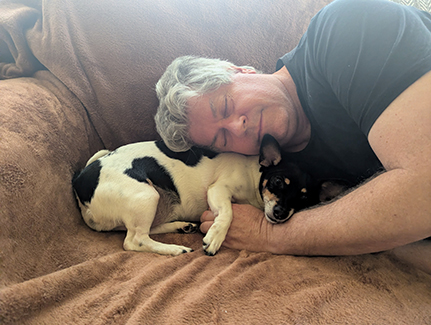
After a day reading Cameron Sullivan’s new book, The Red Winter, I took a few minutes to rest my eyes with Lucy, the Reading Project dog.
But Lucy is ever vigilant, possessing hair-trigger reactions. No period of respite, no matter how briefly intended, could ever last!
- bikerbuddy
2 April 2026
The International Booker Prize Shortlist for 2026 Announced
The International Booker Prize Shortlist for 2026 was announced yesterday. So begins this years’ round of following the two prizes. The International Booker, awarded for a translated book, is the first award, followed later in the year by the original Booker Prize, which started in 1969. The International Booker Prize has been awarded in its current form since 2016. We have an ongoing long-term project to review all the Booker and International Booker Prize winners since they were inaugurated.
Given that, I always like to put up the shortlists each year. I’ve taken descriptions for each book from the Booker website. You can view this year’s International Booker page on the official site by clicking here.
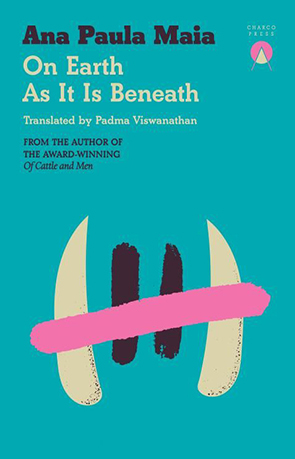
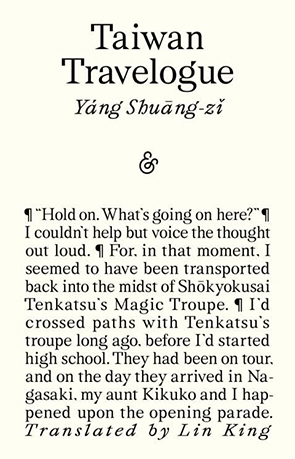
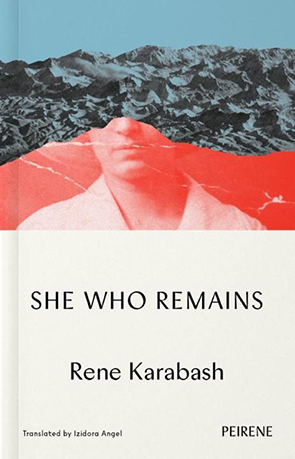
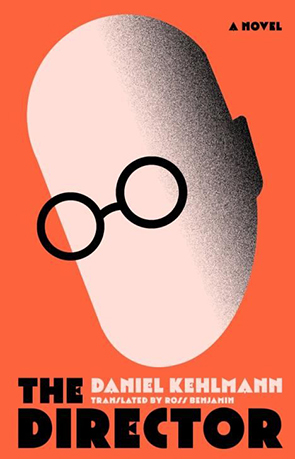
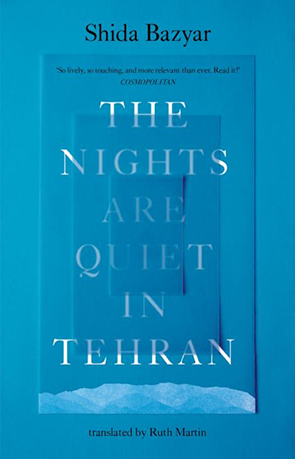
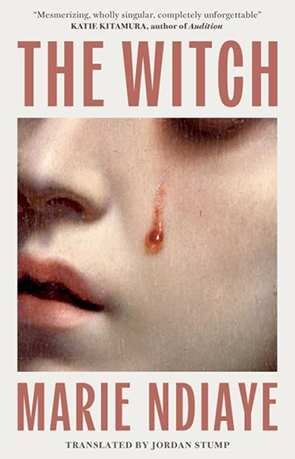
- bikerbuddy
1 April 2026
Us Modern Luddites
Yesterday I finally managed to get back on schedule with my pages for ‘Homer and the Epic Cycle’ project, with a third page published for The Odyssey in March. Ever since I heard that Chris Nolan was releasing a screen adaptation of The Odyssey in July, I’ve wanted to finish our Odyssey pages before it gets released. It’s easy to drag it out. The Iliad pages took a couple of years to complete, in the end.
That’s because this website is designed by, and its contents written by human beings. We have things going on in our lives, too! I say this because I find the prospects for the future lamentable: a future when people may want to work creatively, but perhaps it is no longer economically viable to pay for human-produced content. Not that we get paid. This is a hobby site. But on a commercial scale, I can imagine that not only authors, but graphic designers, webmasters and many other industries will become increasingly redundant occupations with the advent of AI.
I know this sounds like doomsaying, but I’ve seen several stories in the last month about mass layoffs in intellectual and creative spheres for this very reason. And in case that sounds like a vague assertion to make a bullshit point, consider the following. Atlassian, a software company founded in Sydney, announced it will be laying off 10% of its workforce – about 1600 people, globally, including almost 500 Australian staff. WiseTech Global announced its plan to cut around 2,000 jobs – around 30% of its workforce – over the next two-years, as part of its “deep AI transformation”. Block Inc., the company that owns Afterpay, has taken an “all in on AI” strategy, and thousands of jobs are being axed in the company as a result. And if you’re of a more creative bent, like you might one day wish to write novels, for instance, then you would have to be concerned about those ads that pop up on Facebook etc, boasting that you can have a book written in the morning and be selling it in the afternoon. That may be an exaggeration, or the returns may be poor in a market increasingly flooded by AI texts on platforms like Amazon, but it can’t bode well for authors who might take months, even years to produce their work in an environment where publishing companies will have to transform how they distribute their products, and perhaps face commercial pressure to publish fewer authors of flesh and blood.
That’s why you may have noticed this little badge appearing on our latest reviews:
I downloaded the badge for free from the Not by AI website (which I really really hope is not produced by robots!)
I was having a discussion with Victoria a few weeks back and I said that as people increasingly assume the content they consume on social media is AI driven, that it might be assumed this website is AI produced, too. I realised this because I was having thoughts that it was nuts how much we’d done on the website over the last decade, starting with a silly conversation and inflated ideas about what we might do. None of this website is AI produced. Not even our logo, the picture of Lucy our dog, reading a book. It was produced from several photos – of her sitting in our hall, from photos of her paws as she was being held, and from a book being tentatively held at the bottom – all of it edited and put together on an older version of Photoshop that has no AI assistance. So I wanted to use the ‘Not by AI’ badge in reviews to signal that the website is produced by humans. Because that is still important to many people. I know there is no way to absolutely convince anyone of this now, given the advancements in AI (I have plans for making a short film on how our reviews are produced, but even that proves nothing in the context of AI). But if you’re in Sydney, if you really care to know, you could always drop me a line, ask to say hello, even. I’ll even meet in the town square of Springwood if anyone demands to know. In that case you can take a photo and prod me a bit, like doubting Thomas poking the wounds of Christ!
Maybe things will get better.
- bikerbuddy
▼ Comments
Comments about blog posts can be written below. If there are multiple blog posts please make it clear which you are responding to. Any comments will be archived with the blog posts at the end of each month.