- Category:Crime Fiction
- Date Read:16 March 2026
- Published:1933
- Pages:192

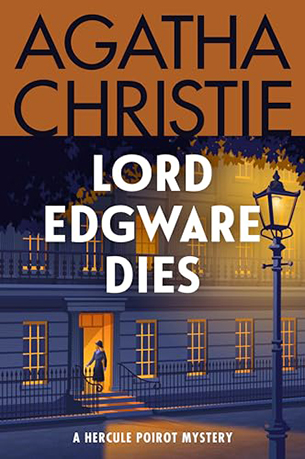
US title: Thirteen at Dinner
Hercule Poirot #9
- Category:Crime Fiction
- Date Read:16 March 2026
- Published:1933
- Pages:192
Hercule Poirot is back, this time with some intriguing murders in London high society to investigate. And this time we get a very Poirot-heavy story to enjoy. He’s there in the opening chapter, he’s there at the end, and he’s there throughout most of the in-between bits. Hastings is our narrator again, this time performing a trick Dr Watson frequently used – taking us back a little in time to tell us a story that caused a stir but has now been forgotten by the public.
We open with Poirot and Hastings at a show for Carlotta Adams, a brilliant impersonator. One of her impersonations is of the actress Jane Wilkinson, the estranged wife of Lord Edgware. Jane is also in the audience and Hastings observes her obvious enjoyment in the show. After the show, Poirot and Hastings once again encounter Jane Wilkinson at the Savoy Hotel and are invited up to her suite for supper. Carlotta Adams, also dining at the Savoy, is also included in this spontaneous supper party, together with an assortment of other guests. Within the hearing of everyone else, Jane dramatically tells Poirot that she has to get rid of her husband, and says that if Poirot can’t help her, she will have to “call a taxi to go round and bump him off myself”.
Poirot promises to help and visits Lord Edgware several days later. Lord Edgware, much to Poirot’s surprise, informs him that although he has previously refused Jane’s request for a divorce, he changed his mind several months earlier and had written to Jane to tell her this. Jane is delighted with Poirot’s efforts, and is unconcerned at the suppression of this letter. She has finally got what she wanted. She wants to marry another man and now will be free to do so.
The next morning, Poirot’s old friend Inspector Japp visits, curious as to why Poirot had an appointment with Lord Edgware. Lord Edgware has been found dead that morning, with all evidence pointing to Jane Wilkinson as the murderer. Her desire to be rid of her husband was well known and she has been identified by both Lord Edgware’s butler and secretary as the woman who visited Lord Edgware in the evening. The only problem for Japp is that Jane was at a dinner party at the time of the murder, with twelve other dinner guests plus staff all swearing that she did not leave all evening. And Japp’s visit to Poirot removes the motive: Jane knew she was already free of her husband.
Poirot then recalls Carlotta’s impersonation and visits her flat, only to discover that Carlotta died overnight, ostensibly having taken an overdose of a drug, she appears to have taken for at least six months. He also finds evidence that Carlotta did indeed impersonate Jane at Lord Edgware’s house the previous night.
The case then becomes a double murder investigation, with Poirot after the person who used Carlotta to frame Jane for the murder only to be murdered herself later in the evening.
There is a big suspect pool for this murder, with some having obvious motives and others having more obscure motives that only emerge after some careful investigation. Once Jane has been cleared, Japp and Poirot still have Edgware’s daughter, the heir to the title, previous romantic interests, and current romantic interests to consider as suspects, as well as various butlers, secretaries, maids and friends, all of whom might have wanted Edgware dead.
It’s further complicated by the thought that the first murder might have only been done for the purposes of framing Jane: that she is really the intended victim. It takes a lot of Poirot sifting through the evidence to work out what really happened in the multi-layered case. Just as one aspect of the case seems to be cleared up, another problem comes up. There are plenty of clues but there are also red herrings galore, making this a difficult murder to solve. But have faith in Poirot, he will eventually get there.
Apart from the very clever story, the thing that sticks out to me in this mystery is just how vile the murderer is. They are totally cold, calculating and self-centred, using other people that they see as expendable and are happy when someone else is arrested for the murders. At the end, they think Poirot should be sorry for exposing them. It’s this light, frivolous story that afterwards leaves you thinking, wow, that is one of the vilest murderers Christie has created!
The other takeaway I have from this book is that Christie gets to give her audience a nice self-referential wink in the middle when she has a character say, “And that very same evening – that very same evening – Lord Edgware dies. Good title that, by the way. Lord Edgware Dies. Look well on a bookstall.” Those people who read this one under the US title – Thirteen at Dinner – just wouldn’t get any additional amusement out of this line.
This isn’t the best that Christie could do with a mystery, but it’s getting close. It was written at the period of her life when she’d got past having to force herself to write because she desperately needed the money, and where she was settling in to a steady period where she wrote brilliant mystery after brilliant mystery. This one is a solid contender. It has memorable characters, it has an ingenious plot and Poirot gets to show just how much cleverer he is compared to others. Worth reading.
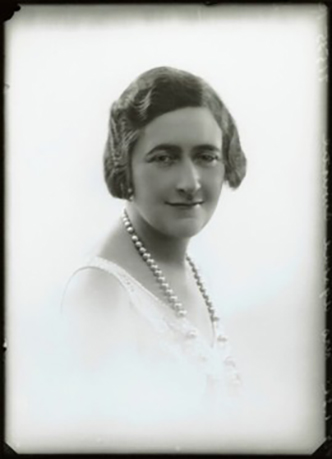
Ruth Draper - Christie’s inspiration
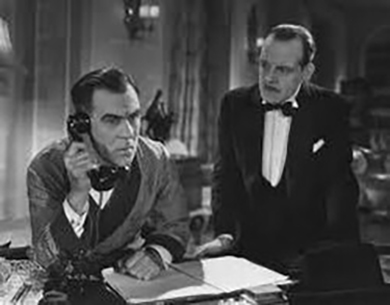
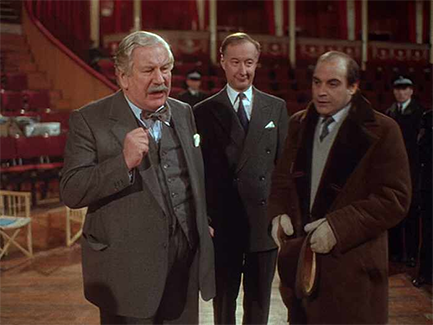
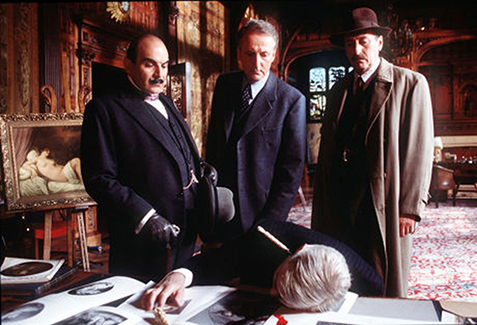
Adaptations