- Category:Historical Fiction, Horror Fiction
- Date Read:5 January 2026
- Year Published:2022
- Pages:313


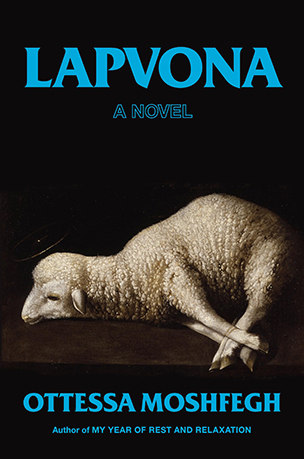
Set in the dreary landscape of the fictional village Lapvona, this deliberately revolting novel follows a wide cast of characters, painting a grotesque portrait of the medieval town. It most closely follows the tweenage Marek, the disabled son of a cruel shepherd father, as well as an array of other characters: Ina, the mysterious village apothecary; Grigor, a disillusioned old man; Villiam, the childish village ruler. The novel gives a sweeping view of the goings-on of the rustic village, not shying away from even the most unsettlingly intimate moments in the characters’ lives.
This book promises to be debauched, which it is. It delivers a cast of corrupt characters and a story of spiraling death and betrayal. It is perhaps one of the most bodily fluid-dense novels I have ever read, especially when it comes to breast milk, which is, strangely, a thematically and story-relevant substance. The village apothecary, Ina, retains social status by nursing every village baby with her magically endowed milk. One of the main concerns of the novel is the widespread sense of entitlement around female bodies. Marek is desperate for a mother figure and weasels into strange relationships with village women as a result. Sexual assault is also a recurring threat for many of the female characters. Some of the gore and explicit depravity in the novel felt earned while a good amount admittedly had me asking to what end it was added to the story. There were a few particularly disgusting moments that served as excellent set dressing for the dark atmosphere of the town, but just as many seemed sprinkled in without enough attention given to the gravity of the event. The quick pace of the novel allowed a handful of memorable images but also numerous moments that felt initially shocking yet ultimately hollow.
The novel has an omniscient perspective, panning rapidly from character to character. Much of the novel’s depravity is the result of its characters’ delusional minds. The omniscient perspective fruitfully gives a wide view of the dynamics in the village. Many of the novel’s most compelling themes and plot elements were the result of the characters’ conflicting goals. Interestingly, the wide scope of the lens created a sort of gradient of perspectives. The characters’ thoughts fade into one another in a way that is sometimes very disorienting and sometimes very clever. Often, the novel shifts from the mind of one character into the mind of another with no clear indication. While I initially thought this would be to the novel’s detriment, I found it easily readable by the end. I also enjoyed how it gives a wholistic view of Lapvona. Even though the book description gave the impression that Marek would be the main character, the real focus is not any one individual but the entire village. The drawback of the unique perspective is that it tends to feel quite detached, never quite coming close enough to invest the reader in any particular character.
Through the collective practices of the villagers, Lapvona critiques religious fervor, opening with a highly religious village and ending with the same village stripped of faith. The events of the novel detail the fall of the church, the corruption of the priest Father Barnabas, and the shifting relationship each character has with Christian belief. Many characters, such as Marek and his father Jude, use Christianity to justify horrific acts. The omniscient perspective privies the reader to the village’s collective view that their suffering entitles them to Heaven. Father Barnabas, the corrupt priest, is not a particularly rounded character but his thoughts and dialogue provide some of my favorite moments of wry humor and sharp irony.
In opposition the more mainstream Christian belief is the apothecary Ina’s more individualized spirituality. Ina, unlike Barnabas, is irrefutably endowed with magic, although it is quite subtle. She appears relatively young despite being over one hundred years old and, as mentioned, is able to nurse every village baby over several decades. Ina and the old man Grigor both find spirituality in nature rather than the church. The novel cites the songbirds as having given Ina her magic. However, even this naturalistic version of religion appears corrupt; Ina’s magic is repeatedly hinted to be evil and is perhaps irrefutably so by the end. My favourite element of the story was the subtle touch of magic as well as the lack of morality inherent to it. It is, like everything else in the story, described with omniscient, objective detachment that makes it feel as though it is simply part of nature.
Some of the magic in the story is arguably ambiguous. There are a couple of events that appear to be plot conveniences (especially a particular chance encounter between two characters in the forest), and I wonder if a mystical touch of fate is meant to be at play. The plot sometimes relies fairly egregiously on conveniences to forward itself, but for the most part I could excuse this while reading because it could be tied to the thematic discussions of religion and fate. Unfortunately, the novel petered out for me rather than delivering a gratifying ending. I’m pretty willing to forgive any perceived flaws, though, because I found Moshfegh’s writing delightful. The sentences are consistently hard-hitting and the scathing yet detached tone is satisfyingly consistent, even as the lens character shifts ceaselessly.
Moshfegh is an undeniably skilled writer, especially at the sentence level. I think this novel works better as a dark historical fiction than a horror story, since much of the horror rings hollow while the historical setting, political intrigue, and religious commentary are all compelling. I recommend this book to readers looking for a title that delves into the grossness of medieval peasant life. Moshfegh has a couple of more popular and well-received novels such as My Year of Rest and Relaxation, but Lapvona seems the most appealing to me of her works. I can imagine that she would be stronger writing a less plot-driven story. I might consider picking up another of her books in the future.