Two Reviews by: bikerbuddy | Toriaz
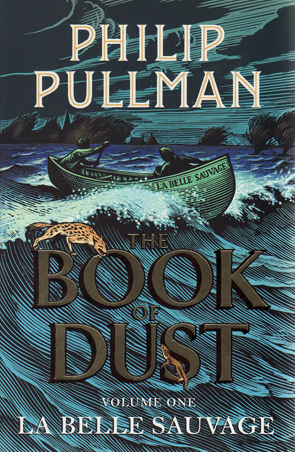
The Book of Dust #1
- Category:Children’s Fiction, Fantasy Fiction
- Date Read:15 December 2025
- Pages:546
- Published:2017
- Prize:Waterstones Book of the Year 2017

The six novels which form Philip Pullman’s His Dark Materials and The Book of Dust, are nominally children’s fiction. They are written at a level suitable for children with protagonists who are children or, at least, are children to begin with. But the novels are far more sophisticated and philosophical than we might expect from most fiction written for children. Of course there are always exceptions, like Antoine de Saint-Exupéry’s The Little Prince, even Milne’s Winnie the Pooh. Everyone will be able to make their own list. But what sets Pullman’s books apart is their self-conscious sophistication: their overt literary allusions and their use of philosophical, religious and scientific thought. Despite this, the novels are highly accessible for children, and would likely be read with pleasure by many adults, too. When I first read Northern Lights, the first book in His Dark Materials trilogy, I felt strongly drawn into the world Pullman had created. Pullman’s story was set in London and Oxford, it seemed, but it was a version that was unfamiliar. Characters had dæmons, which wasn’t immediately explained, and Pullman’s world seemed like an older and more magical version of our own. The world building was intriguing, as was the story. Then there were mysteries, like the whispered rumours of children who were being taken by the ‘Gobblers’, as well as fantastical elements like witches and armoured bears. Who could resist? But His Dark Materials also draws upon scientific theories about Dark Matter and from religion, albeit couched in fantastical terms accessible for children, and it has an epic sweep with pretensions rivalling Milton’s Paradise Lost. Clearly, Pullman had more on his mind than a light entertainment when he wrote these books.
Pullman’s original trilogy told the story of Lyra Belacqua and Will Parry, and the role they play in Lord Asriel’s resistance against the Authority, a godlike being who presides over many worlds, including our own in the guise of the Christian god. His earthly power is represented by the rise of the Magisterium in Lyra’s world, analogous with the Catholic church in our own. The grand sweep of Pullman’s narrative addresses those large philosophical ideas about fate, free will and sin, and challenges traditional dogmas. The novels refuse to be intellectually constrained. Malcolm Polstead, who is the male protagonist in La Belle Sauvage, is the son of an inn keeper, but he yearns for something more for his future. When Hannah Relf, an Oxford scholar, befriends him, she lends him books like Agatha Christie’s The Body in the Library, Stephen Hawking’s A Brief History of Time and Peter Frankopan’s The Silk Road. These aren’t books most of Pullman’s younger readers will be familiar with, but by including them in his story he achieves two possible effects. First, he may encourage wider, more sophisticated reading. Young readers often identify and engage with the protagonist of a story. I can imagine a young reader looking at these books as a way of further engaging with Malcolm and his story. The other thing is that Pullman is hinting at some of the preoccupations of his series through these titles. Christie’s novels are popular and deal with crime, usually murder, and morality. More than one of Pullman’s child protagonists will struggle with the morality of killing a fellow human being. Likewise, Hawking’s book about physics and time signals the importance of science in Pullman’s novels over religious dogma. And Frankopan’s books de-centre the European perspective of history, which is largely predicated upon Christian dogma and its systemic power.
Of course, His Dark Materials trilogy also takes its name from John Milton’s Paradise Lost. The ‘Dark Materials’ are a reference to ‘dust’, the primordial matter of the universe in Pullman’s world from which worlds are created and consciousness is born. But the allusion also anticipates the war with the Authority, the godlike power that presides over many worlds, like the war waged by Satan against God in Milton’s epic. The Authority is clearly meant to include a representation of the Christian god, while the Magisterium is analogous to the Catholic church with its concomitant historical abuses.
La Belle Sauvage reads like a prequel to that story. Basically, it is the story of how Lyra is brought to Oxford, where we meet her at the beginning of Northern Lights. She has lived all her childhood under scholastic sanctuary at that point, protected from the Magisterium. But The Book of Dust is not merely an indulgent prequel novel, nor is the trilogy, as a whole, a prequel to His Dark Materials. The Secret Commonwealth and The Rose Field are set after the events of His Dark Materials when Lyra is a young woman. La Belle Sauvage is really about establishing Malcolm and Alice Parslow as relevant figures in Lyra’s life, since their stories intertwine years later in the later novels. Alice is a kitchen worker in La Belle Sauvage, working for both the priory and the Trout, Mr Polstead’s inn, and is instrumental to Lyra’s safety and well-being in the second half of the novel.
So, this book is really trying to do two things, and this is made obvious by the two parts into which Pullman splits his narrative. First, Pullman needs to establish who Malcolm and Alice are, and second, he wants to stitch them into the fabric of the original story. Their relationship with Lyra is going to make more sense later if we understand the dangers they faced to protect her when they were only children, themselves. This is often the burden of prequels: that they are structurally a little wonky because they are constrained by an original text as well as the need to define a new story. In this case, the real story – the part where we learn new things – mostly occurs in the first half of the novel. Malcolm is the son of parents who run an inn which happens to sit across the river from a priory where Lyra, only six months old, has been taken to be raised by nuns because, it is said, her mother does not want her and her father is too busy. For some reason, Lyra is the subject of incursions into the priory. Officious men from the Consistorial Court of Discipline (CCD), a kind of secret police of the Magisterium, have tried to remove her. Another man with a three-legged hyena dæmon is trying to kidnap her, too. It is all very mysterious, but readers of the original series know where this is going; why Lyra is important. In the meantime, the stage is being set for a desperate flight to save Lyra from these adversaries as flood waters rise.
The second part of the book, while exciting, is not really new, except that it establishes Alice as important in Lyra’s story. Even so, it becomes a chase story and we know how it ends. The most relevant aspects for this new trilogy – an encounter with a faerie woman who tries to claim Lyra as her own and a mysterious island of forgetting which hints at the nature of the secret commonwealth in the second book – feel like they are tangents to the chase, and therefore they seem to slow the plot, whereas they are really the only new pieces of world building that Pullman achieves in this second half: the introduction of faerie elements and the world of the imagination known as the secret commonwealth. Everything else feels familiar. There is the familiarity of the world because it is so much like our own, anyway. There is the alethiometer and its history, dæmons (the outward manifestation of souls in animal form in this world), the Magisterium and the approaching story of the original trilogy.
Malcolm’s personal story in the first half of the novel is most important but it is subsumed by the inevitable tide of the flood which rushes Lyra towards Oxford. Malcolm is a humble inn-keeper’s son, but his willingness to help the nuns and his interest in Lyra show him to be a sensitive and caring boy. His involvement with Hannah Relf, an Oxford scholar connected with a clandestine organisation known simply as Oakley Street (possibly the only other piece of new world building), reveal Malcolm’s intellectual potential and sparks his desire to be a scholar. Hannah acts as a mentor to Malcolm and through her we are given a glimpse into the secret machinations of Oakley Street. Hannah is said to be based on an elderly woman who used to lend Pullman books when he was a child. She is supposed to be reintroduced into the story in The Rose Field, but her role in La Belle Sauvage is truncated by the flood and the events that follow.
What this means is that for those wanting to read both trilogies who are wondering which order to read the books, you have a choice. A chronological reading will take you from La Belle Sauvage onto Northern Lights, and through His Dark Materials before returning to Book 2 of The Book of Dust, The Secret Commonwealth. But Pullman’s care to establish the importance of Malcom and Alice for Lyra’s later story means that this trilogy is properly a successor to His Dark Materials, not its prequel.
For fans of the old series, La Belle Sauvage is going to seem less groundbreaking. Pullman’s world is beginning to feel more familiar – more like our own – even if the level of threat and tension remain high. Younger readers may wish to start here, since the story does provide a good familiarising background to Northern Lights. Overall, the story feels like the deep breath before the exhalation. Pullman is establishing his characters, hinting at new ideas to come – the secret commonwealth – and his epigraph at the end of the novel (from another literary heavyweight, Edmund Spenser), anticipates a new beginning that he has been writing towards:
- On the long voyage whereto she is bent:
- Well may she speede and fairely finish her intent.
This was interesting read, both as back story to what we know will come in Northern Lights, and as a good story in its own right, with Malcolm as a personable protagonist. It could easily be read by anyone who has never read the His Dark Materials trilogy, although if you have already read that you get the fun of encountering familiar characters. Basically, it is set 12 years before Northern Lights. Lyra, a 6 month old baby has been left with a kind order of nuns at a Priory outside Oxford. Malcolm Polstead is an 11 year old boy who lives with his parents at the Inn near the Priory. Malcolm is a friendly and inquisitive child who often helps the nuns with chores around the Priory. He meets the baby that has been placed in the nun’s care, and is instantly devoted to her. Through a strange chain of events he also becomes a spy. He realises that baby Lyra is in danger and has to act quickly to save her when her life is threatened. Just as one of her enemies (several different groups are after her) attempts to take her, a calamitous flood hits Oxford, destroying much of the town and surrounds. Malcolm and his friend, Alice, rescue Lyra then flee in his boat, La Belle Sauvage, to try to reach somewhere safe for her.
The broader story of this book documents the rise of the power of the Church. Although we are not given an exact timeframe, there are references to the former government which appears to have been fairly liberal. It has been succeeded by a more conservative government controlled by the church. The world is becoming oppressive, generally against scientific enquiry. Standard behaviours of fascist governments are appearing, with agents of the church interrogating whoever they wish with no one brave or foolish enough to cross them, and people vanishing without a trace.
Malcolm is an intelligent boy, interested in learning. He has dreams of higher education, and of perhaps becoming a scholar or an explorer. After coming into contact with Professor Hannah Relf of Oxford, one of his pleasures each week is choosing new books from her library to read, and then discussing them with her. He refuses to join the League of Alexander at school, and sees the group as sinister, and probably connected with the Consistorial Court of Discipline (a church group similar to the Inquisition). The aim of the league is to get children to report any transgressions or heresies in parents or teachers. It reminded me of a scene in 1984 where one of Winston’s neighbours was reported by his children for speaking against Big Brother in his sleep. It is obvious that Malcom will not just accept the repression of the church. Becoming a spy for Professor Relf seems an obvious choice.
This book is set in the same universe as Northern Lights, but where that world seemed very different to our own, this time the world feels much more familiar and very like our own, just not quite the same era as we live in. An obvious example of this is the books Malcolm chooses to borrow from Professor Relf, such as Agatha Christie’s The Body in the Library or A Brief History of Time or The Silk Road. This can perhaps be explained by it being set around 12 years before Northern Lights, with those 12 years of church control setting back progress, and repressing scientific investigations like a mini version of the dark ages.
One of the first things I loved in the original trilogy was the idea of dæmons, the animal shaped companion every human in this world has with them always, like an external soul. I fully accepted this aspect of the world, and even wondered what form my own dæmon would take if I could get one, like Will manages to do in The Amber Spyglass. And because I accepted the rules about dæmons that we gradually learn over the original trilogy, it was shocking in this book to encounter a character who didn’t follow them; who actually deliberately hits his dæmon and abuses her. The reason for this isn’t something that is ever explained, unless we accept one character’s explanation that he must be mad. The man himself seems attractive at first, but no one warms to him after they see his dæmon. Of course, whenever a dæmon is hurt, their human also feels the pain. So in beating his dadæmon, Bonneville is also beating himself. So his actions become a form of self-flagellation, similar to the albino monk, Silas,in The daVinci Code. We know from his actions over the course of the book that Bonneville is monstrous, but the self-flagellation seems to suggest that he hates himself for his actions.
Although this book was fairly fast paced, some chapters near the end seemed to drag. I wasn’t sure where Pullman was going with a few of the scenes, such as with the fairy or the people in the underground garden. Perhaps the fairy incident is meant to impart something special to Lyra? Malcolm and Alice discuss this briefly, but then no more is said of it. It certainly helped them escape the underground garden, but as I didn’t see the reason for that scene either, I don’t think that much of the idea that information gained from one unnecessary encounter helped them escape another unnecessary encounter. Both scenes seemed to be just filler, to bulk out the story, rather than being important to the plot.
Of course I’m not the intended age group for this book. My youngest daughter is, and she has been waiting for me to finish reading it so that she can start it herself, after finishing His Dark Materials just a few days ago. Perhaps the fairy scene and the underground garden scene, and some of the other fantastical elements of the story, will have more appeal to her then they did for me.
But apart from this little quibble, I really enjoyed book. I thought it added background to the world of His Dark Materials and was a fun, fast-paced adventure story. It will be interesting to see what Pullman does with the second book in the series, due out sometime this year.
Note: Northern Lights is the title of Philip Pullman’s first volume of His Dark Materials. It also known as The Golden Compass, the title under which it was published in North America.