James Bond #1
- Category:Spy Thriller, Now A Major Motion Picture
- Date Read:16 January 2026
- Year Published:1953
- Pages:189


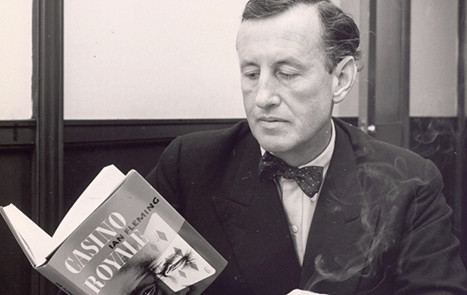
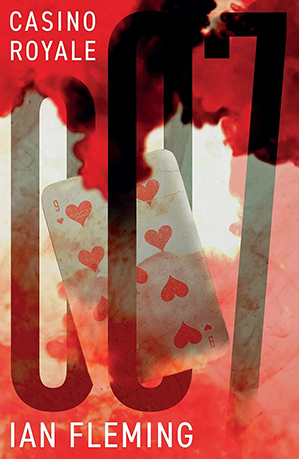
Having been a fan of the films (with a clear acknowledgement of the franchise’s many vast shortfalls), it has been a long-time ambition of mine to read the novels that have inspired the cinema icon that is James Bond. It is well known that Casino Royale, not Dr. No, is the first chronological outing for the titular title character, but I was ill-prepared for just how haphazardly the filmmakers had jumbled the order of the stories around to make for better cinema (one assumes).
This is quite a shame as Casino Royale presents itself as a very personal, intimate, and sensible look into the early career of not just a secret agent, but James Bond himself. Having only recently obtained his infamous Double-O status, Bond is tasked with foiling the French-Soviet SMERSH Trade Union Paymaster Le Chiffre as he attempts to recoup embezzled Union Funds via a high-stakes baccarat tourney held at Royale-les-Eaux’s famous The Royale casino. Under the visage of a peaceful holiday vista, Royale proves to be under Le Chiffre’s control as Bond angles around spies and assassins to continue betting more than money at the table. Aiding him are CIA agent Felix Leiter, French espionage agent René Mathis, and Vesper Lind, Personal Assistant to Section S of MI6, assigned to report on the progress of operation.
After a series of minor setbacks and close shaves, Bond bankrupts the house (Le Chiffre), forcing him to kidnap and torture Bond to regain the lost funds. Narrowly escaping with his life and appendages intact, Bond and Vesper rest and recover in a small hotel down the French coast where he contemplates leaving the Secret Service in aid of his newfound love. Unfortunately, Lynd begins exhibiting suspicious behaviours and, after an apparent recovery of faculties, Bond discovers her body in their room after an apparent suicide. Coupled with a suicide note to him detailing how she had been a double agent attempting to seize the funds but had changed her mind after falling for him, Bond seeks revenge against the secretive Russian anti-spy agency SMERSH whom he believes forced her hand.
For a novel written in 1953, very few aspects have aged poorly, or at all. Bond’s shortcomings as a human being; smoking, drinking, and womanising, are merely character traits of a damaged and coping character. When it comes to the character’s treatment of women, we see this via the conduit of Vesper Lind. Bond’s attraction to her is much deeper and more personal than the films usually depict his fly-by-night affairs, with so-called “Bond Girls”, but at least the film adaptation of this novel came closer to the novel than the rest. Their love derives from a clear and sensible place of reasoning within Bond, and while he is annoyed at her presence (and internally chastises the idea of a woman being here in a field for men), his ideas of such things wane and evolve, and even come from places of concerned safety or initial panic at a sudden lurching turn of events. At least Bond, being a deeply flawed character, has stayed true regardless of interpretation, but here we get a glimpse behind the motivations behind those flaws.
Where the Bond novels truly excel are in their descriptions. Not just in the look of a location, but the feeling: the grand historical recounting of locations and organisations in their heyday and darkest of times; the cynical observations of people, decor, and current affairs; and Bond’s penchant appreciation of good European cars. How the world is viewed, as well as the cold hard facts of its facets, paints not only a colourful canvas in setting, but how such a thing is seen through the eyes of Bond adds such broad strokes to the character, thanks in part to the beautiful language utilised. The layers of depth and humour conveyed in a single paragraph had me wanting to read sections of the novel out loud just to feel the words cross my own tongue, to taste them just once. That being said, there are times where certain details are missing or omitted for the sake of dramatic purposes, or to focus on other core aspects of the story, but one hopes these are a symptom of first-novel teething problems and are resolved in future instalments.
Bond’s world, as well, doesn’t appear to be as impossibly full of spies or agencies as many other titles in this genre. Here we have sensible realism when it comes to the portrayal of spies: their skills or fallibilities in execution; the sorts of gadgets they might utilise. And their motivations and means to obtain their desires are far and away not what you’d find in an exaggerated fantasy or sci-fi adjacent novel. The motive is money, the method is through a legitimate gambling establishment and competition, squeezing the ultra-rich dry to fund bad spending habits. Le Chiffre is a desperate gear in the machine, trying to pretend he’s functioning perfectly when in reality, he’s slipping every second tooth. About as elaborate as a spy tool that you’ll see is a single-shot silenced cane gun, while Bond, himself, has no such gizmo at his disposal at any time throughout the book. The setting of Royale-les-Eaux and its titular casino are explored forlorn poeticisms that spring right off the page, ensnaring you in this dangerous paradise. If the devil’s in the details, then this book is purely satanic.
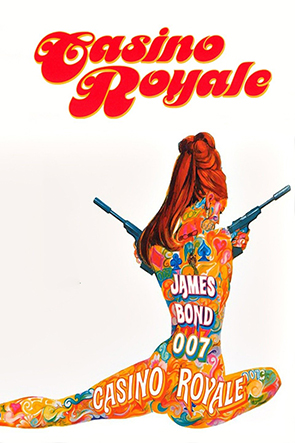
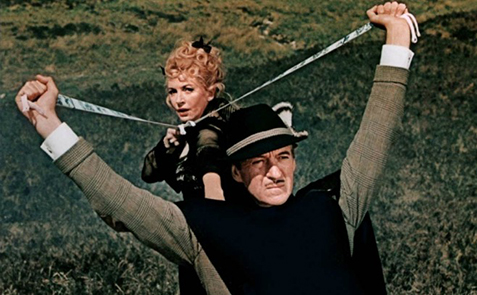
The distinct alterations due to the transition from book to film arise in several forms. The action and set-pieces, a stable of the film franchise, are scaled back considerably to smaller, more intimate affairs that are still, on their own, bombastic (i.e. an explosion on the sidewalk, or disarming a gunman quietly in the middle of a crowded room). There is a greater emphasis through these events, as well as generally, on Bond’s own thought processes and mental state, dealing with life-threatening incidents which, while on the surface make him appear suave and in control at all times, demonstrate a desperate survivor, a human being jaded by war and death, grappling with holding onto mortality by a hair’s breadth.
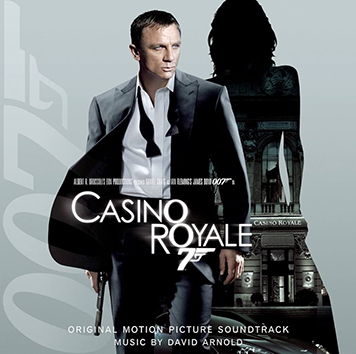
Nothing demonstrates this better than the book’s main narrative climax where Bond is tortured much in the same way as the film featuring Daniel Craig depicts. Graphic and laborious, it doesn’t shy away from showing the depravity of torture, explaining its effect on those who endure it, and even Bond’s ego as he processes how it may cripple him in terms of the flesh. It is a side of Bond that is often only alluded to or discounted entirely from the films in exchange for the “blunt instrument” or “suave action hero” that the Bond from the novel is certainly is not. The author’s intent and real-life experience and inspiration for this war-torn version of Bond, jaded and making light of the dark to create distance from it, is clearly from a personal place and it comes across as being very genuinely human.
Overall, Casino Royale was a joyous piece of literature that holds up extremely well. Its cleverness with language, and its depth of characters and events, had me hanging on to the end. It flowed so well that I could barely put it down, and once dog-eared, I eagerly anticipated returning to the world of James Bond, regular human spy (not super-spy action hero man). While the movies are generally good for quick thrills and kicks, I definitely think these novels will be works I return to regularly. At least, I hope the quality maintains as I move into the next story in chronological order: Live and Let Die.
The James Bond Series
Greyed-out covers indicate a review is yet to be pubished for that book on this site