- Category:19th Century Fiction, Gothic Fiction, Horror Fiction, LGBTQ+
- Date Read:21 February 2026
- Year Published:1871-1872
- Pages:156


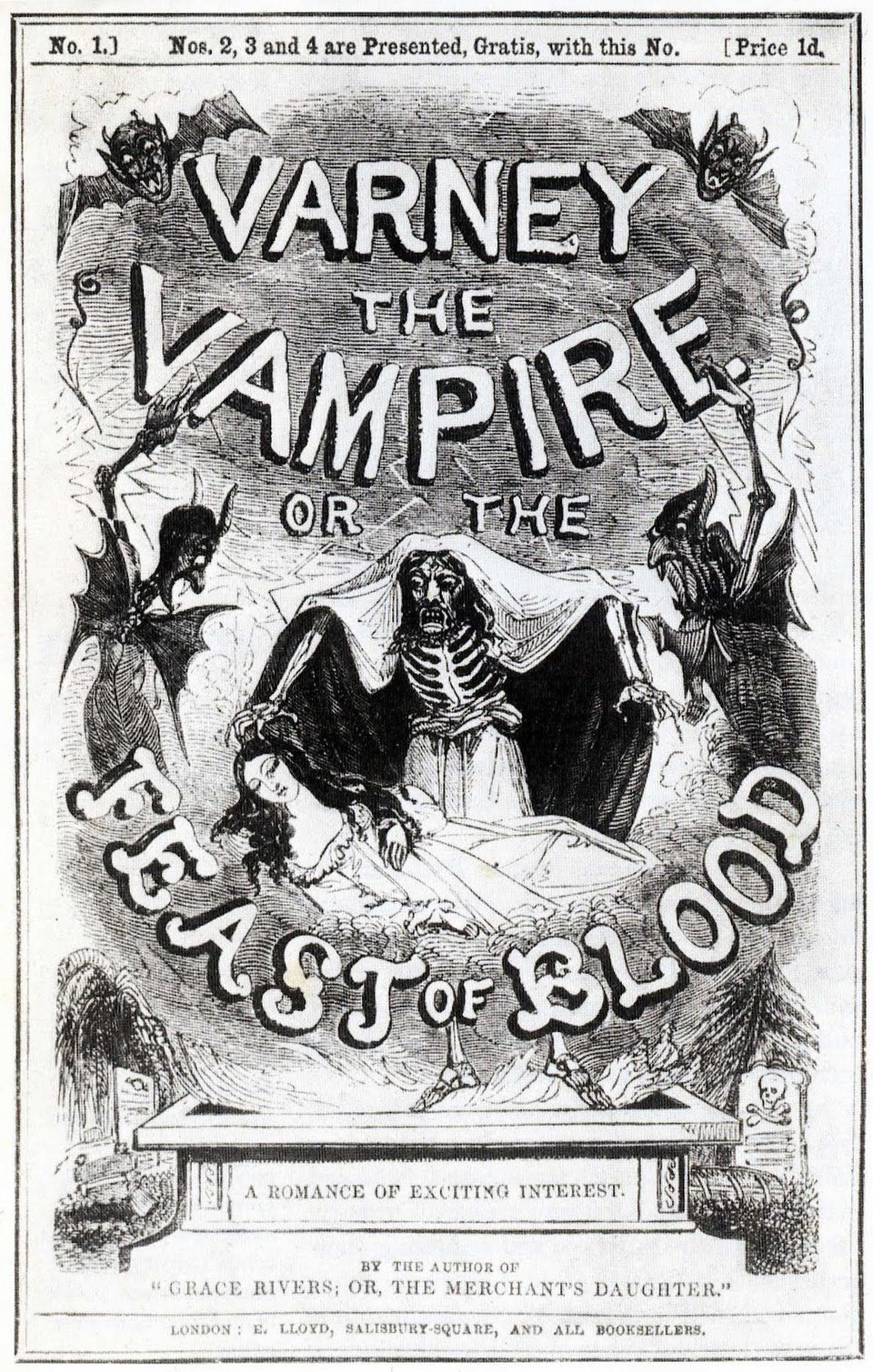
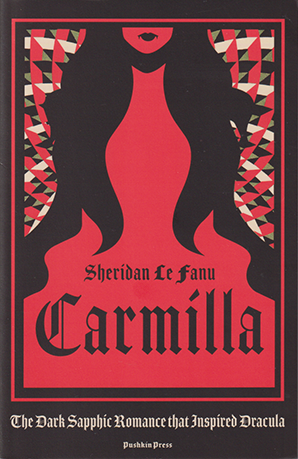
If you know anything about Sheridan Le Fanu’s vampire classic, Carmilla, before you start to read it, you will probably know that Bram Stoker was highly influenced by the novel when he wrote Dracula. In fact, Le Fanu was Stoker’s employer when he first started his career. Stoker worked as a theatre critic for the Dublin Evening Mail, the paper Le Fanu co-owned with Dr Henry Maunsell, himself a medical doctor and journalist. Most of what you can read about Carmilla will tell you that it predated Dracula by 25 years (Carmilla was serialised from 1871 to 1872, Dracula was published 1897) while my edition also claims, “Carmilla is the original vampire story”. This is not true. Tales of vampires appear as early as the mid-eighteenth century, and the nineteenth saw the publication of some key vampire texts, including John Polidori's The Vampyre (1819), itself inspired by a story written by Lord Byron, as well as Varney the Vampire, serialised as a Penny Dreadful from 1845 – 1847. Samuel Taylor Coleridge’s narrative poem, Cristabel, left unfinished, arguably has vampiric overtones which may have been fully realised had Coleridge completed it. In fact, it is considered a possible influence on Le Fanu’s Carmilla.
But when Stoker published Dracula, it was with Mary Shelley’s Frankenstein that his mother wished to compare it, claiming, “No book since Mrs Shelley’s Frankenstein or indeed any other at all has come near yours in originality or terror . . .” I personally believe Shelley’s novel is a better novel than Dracula, and Mrs Stoker’s claims of originality are equally questionable. Carmilla may not have been the first vampire story, but it is one of the most influential, and Stoker knowingly took inspiration from it. Baron Vondenburg, a vampire expert who appears near the end of Carmilla, is clearly a forerunner to Bram Stoker’s Professor Abraham Van Helsing. The erotic potential of the vampire story also finds first expression in Carmilla.
Part of Carmilla’s reputation rests on its homoerotic elements and a sexual awakening of its first-person protagonist, Laura. Laura, a young woman who lives with her father in a schloss – a castle – in Styria, is befriended by Carmilla, another young woman it seems, who is hastily left in the care of Laura’s father by her mother after their carriage is turned over outside the castle. Carmilla’s mother is in great haste, claiming she has some important errand, and says her daughter cannot travel in her current state. Carmilla appears lifeless, though turns out only to be stunned by the accident. Laura is delighted by the promise of Carmilla’s extended presence since she was denied the pleasure of a visit from General Spielsdorf’s niece, Mademoiselle Rheinfeldt, Bertha, after she suddenly died from an illness. This death will prove to be a significant turning point in the later part of the story.
Laura prefaces her main story with a short digression about a nocturnal visit she had from another girl in her bedroom when she was six years old. Laura soon realises that Carmilla was the girl who appeared in her vision, and Carmilla likewise acknowledges a similar experience at that time, and says she recognises Laura, too. As Carmilla settles into their home the story progresses with the deaths of young women in the area who succumb to an illness local peasants refer to as ‘Oupire’, a traditional word for ‘vampire’. As the weeks and months progress, Laura also feels unwell, having experienced a nighttime visit by something like a large cat that seems to pierce her neck. Eventually, the story moves towards now-familiar vampire tropes about the nature of vampires and how to despatch them.
Amongst all this is the developing relationship between Laura and Carmilla which reads euphemistically like a lesbian romance. Laura finds herself paradoxically both attracted to and repelled by Carmilla:
Now the truth is, I felt rather unaccountably towards the beautiful stranger. I did feel, as she said, “drawn towards her,” but there was also something of repulsion. In this ambiguous feeling, however, the sense of attraction immensely prevailed. She interested and won me; she was so beautiful and so indescribably engaging.
Laura’s ambivalence is a credible response from a young girl struggling with transgressive sexual desire. A short while later Laura repeats these sentiments, though her feelings are evidently progressing past Carmilla’s physical perfection, as she struggles with her own conflicted feelings:
I experienced a strange tumultuous excitement that was pleasurable, ever and anon, mingled with a vague sense of fear and disgust. I had no distinct thoughts about her while such scenes lasted, but I was conscious of a love growing into adoration, and also of abhorrence.
Modern readers would recognise that Laura is drawn by a powerful Sapphic urge. And this response is echoed, parallelled and amplified by Carmilla, who extends the language of attraction and desire to the level of possession and obsession:
Sometimes after an hour of apathy, my strange and beautiful companion would take my hand and hold it with a fond pressure, renewed again and again; blushing softly, gazing in my face with languid and burning eyes, and breathing so fast that her dress rose and fell with the tumultuous respiration. It was like the ardour of a lover; it embarrassed me; it was hateful and yet over-powering; and with gloating eyes she drew me to her, and her hot lips travelled along my cheek in kisses; and she would whisper, almost in sobs, “You are mine, you shall be mine, you and I are one for ever.”
As the emotional pressure builds, Laura is increasingly cognisant of the mysteries that surround Carmilla, of which she will not speak. Carmilla’s mother, before leaving, had forbid Laura and her father asking about the family and its history. Carmilla responds to Laura’s questions with an ultimatum that modern audiences would recognise as an invitation to vampirism:
I am under vows, no nun half so awfully, and I dare not tell my story yet, even to you. The time is very near when you shall know everything. You will think me cruel, very selfish, but love is always selfish; the more ardent the more selfish. How jealous I am you cannot know. You must come with me, loving me, to death; or else hate me and still come with me, and hating me through death and after.
I have repeatedly referred to ‘modern readers’ deliberately. It is interesting to consider how early readers of the story may have received it. Its homoerotic elements would have been evident to Victorian readers, most likely titillating and distracting. And while the novel foregrounds the mystery of Carmilla’s family and her peculiar behaviours, it is unlikely that this would have signalled to Victorian readers that Carmilla was a vampire story to begin with. While there had been other vampire stories over the course of the last two centuries, and traditions in Eastern Europe had existed even longer, vampires were not entrenched in popular culture to the degree we see now, and the common tropes of vampires – crosses, sunlight, earth-filled coffins, stakes to the heart, etcetera – were widely unknown.
As a result, Carmilla is a different kind of Gothic horror than one might expect. Modern readers may easily follow the clues about vampirism, but Victorian readers, presumably, may have had a more difficult time of it. The story was first serialised in The Dark Blue, a short-lived periodical, between 1871 and 1872. It was presented as a Gothic tale, but not revealed as a vampire story. The story is a mystery with a slow-burning revelation that culminates in a fairly hasty conclusion. In fact, Le Fanu structures the novel more like crime fiction. It is a point easily missed since, as modern readers, we have a greater understanding of the cultural context of the book. It is like the children’s rhyme about Humpty Dumpty: we forget the rhyme was meant to be a riddle, since it is now commonly understood that at Humpty Dumpty is an egg.
Le Fanu, like a crime fiction writer, employs a series of scenes and characters to progressively reveal clues. A son of a picture cleaner arrives at the castle to return old paintings that have been cleaned, and one portrait, hundreds of years old, is the likeness of Carmilla in every detail, down to a mole on her neck. Carmilla mysteriously goes missing at night. And Laura’s illness seems to have something to do with Carmilla. Late in the story a woodsman speaks of a history of vampires in the area, and the efforts to eradicate them. It is only in the last third of the story that General Spielsdorf slowly reveals the details of his daughter’s death, so much in keeping with Laura’s own experience, which inevitably leads to the conclusion that Carmilla is a threat. But it is Le Fanu’s use of Baron Vordenburg, in the final chapter, that confirms Le Fanu has been progressively building towards the criminal reveal. Baron Vordenburg’s purpose in the story is merely exposition – establishing Le Fanu’s version of vampire lore, and stitching together the story elements that might still have readers puzzled. Baron Vordenburg is essentially Hercule Poirot walking into the narrative to reveal the culprit and their methods.
This is to say that Le Fanu may have other interests besides a salacious love story or its Gothic elements. One indication of this comes in the story’s republication in late 1872 as part of a series of five short stories and novellas by Sheridan Le Fanu under the title In a Glass Darkly. The collection is introduced by an unnamed physician and former medical secretary of Dr Martin Hesselius whom, we are told, was the physician’s senior by about 35 years. The stories from In a Glass Darkly are purportedly extracted from Dr Hesselius’ papers covering his patients’ cases over the course of his career. “Here and there,” Hesselius’ physician secretary writes, “a case strikes me as of a kind to amuse or horrify a lay reader with an interest quite different from the peculiar one which it may possess for an expert.” So, the selected stories are exemplary cases fit to provide entertainment for the curious. In one story, ‘Green Tea’, a clergyman is haunted by a demoniacal monkey no one else can see. In another, ‘Mr. Justice Harbottle’, an evil judge is plagued by nightmares of punishments that manifest as real physical injuries. Carmilla is the final story in this collection.
Sheridan Le Fanu’s decision to provide his collection this metacontext framework suggests a reality that modern readers sometimes forget. Darwin’s Origin of Species had been published in 1859, just over a decade before Le Fanu writes Carmilla, and the impact of that theory is evident in the story. When Laura’s father reveals there have been more deaths in the area due to the mysterious disease that is taking young women, he attributes the disease to natural causes, despite the growing hysteria he attributes to superstition:
“All this . . . is strictly referable to natural causes. These poor people infect one another with their superstitions, and so repeat in imagination the images of terror that have infested their neighbours.
Even so, he qualifies his position: “We are in God’s hands”. Carmilla, responds, not against his position on nature, but the efficacy of God:
“Creator! Nature!” said the young lady in answer to my gentle father. “And this disease that invades the country is natural. Nature. All things proceed from Nature—don’t they? All things in the heaven, in the earth, and under the earth, act and live as Nature ordains? I think so.”
Carmilla’s position holds no place for God. This is not to say she disagrees with the father’s exposition on nature, merely that she rejects his belief in spiritual order. In her response, Nature expands and encompasses the realm of heaven, just as it does the earth. In fact, Carmilla’s language is occasionally heavy with naturalistic imagery. Of the fate of lovers she states:
Girls are caterpillars while they live in the world, to be finally butterflies when the summer comes; but in the meantime there are grubs and larvae, don’t you see—each with their peculiar propensities, necessities and structure.
Her explanation as to the efficacy of a charm Laura has purchased would be in keeping with the tenets of the father:
. . . you don’t suppose that evil spirits are frightened by bits of ribbon, or the perfumes of a druggist’s shop? No, these complaints, wandering in the air, begin by trying the nerves, and so infect the brain, but before they can seize upon you, the antidote repels them. That I am sure is what the charm has done for us. It is nothing magical, it is simply natural.
The charm has no spiritual power. Instead, it has been infused with some natural remedy.
In the context of nineteenth century interests in science and the occult, it is not so surprising that Le Fanu’s narrative flirts with the notion that spiritual and supernatural elements might have a rational explanation. The popularity of seances in the nineteenth century, for instance, represented a popular belief in the spiritual and a desire for comfort, but their study was also motivated, sometimes, by scientific curiosity and approached with scientific objectivity. While many spiritualists were debunked, some men with scientific backgrounds were willing to lend credence to the idea that there might be some scientific rationale behind spiritual phenomena. William Crookes, a chemist who would eventually become the president of the Royal Society, investigated a medium, Florence Cooke, who claimed to be able to materialise a spirit called Katie King. Crookes not only supported Cooke’s claims, but took a series of photographs that purported to prove the materialisation.
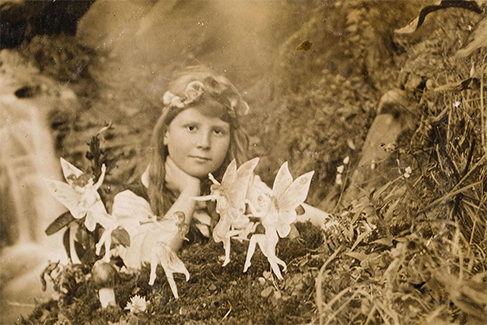
Alfred Russel Wallace, who formulated the theory of natural selection alongside Darwin, was also a staunch advocate of spiritualism. Treating spiritualism and its possible links with the natural world as a proper object for scientific investigation made sense during this period. Arthur Conan Doyle, the creator of Sherlock Holmes, famously believed in fairies and was taken in by the Cottingley Fairy photographs. Even Marie Curie and her husband, Pierre, took the trouble to undertake scientific investigations of spiritualism as late as the early twentieth century, and while Marie Curie was somewhat sceptical, Pierre was at first willing to give the subject some credence.
By representing his five stories in In a Glass Darkly as taken from the papers of Dr Hesselius, Le Fanu is contextualising them within the milieu of scientific interest during this period. Hence, the focus on vampirism is treated as a natural phenomenon, which is further explained in Baron Vordenburg’s final exposition, where he posits that vampirism may be the result of suicide, and speaks of the duality of vampiric existence in the language of a scientific classification, twice referring to it as an “amphibious existence”.
What may have been disturbing about Carmilla for nineteenth century readers, is that Carmilla’s rejection of God as a purposeful force directing nature deprives society of a central paradigm upon which order is predicated. Laura’s father remains unnamed, while the society around his castle has been destroyed. We learn from Laura in the opening pages that the nearest “inhabited village” is twenty miles away, yet there is a now-deserted village three miles to the west, which has suffered from the depredations of vampires, we later learn. The vampire is a natural force that challenges the tenets upon which society is founded and upon which patriarchal order is maintained. The father has no named identity in the text, and patrilineal descent is challenged by a new natural order. Carmilla’s asseveration, “You are mine, you shall be mine, you and I are one for ever”, is an offer of a new life that unbinds Laura from the patriarchal order: that reinvents her as a new being outside the bounds of God and father. It is little wonder that the suicide is a potential candidate for vampiric transformation, having already left the grace of God behind by their own self-destruction, according to the beliefs of nineteenth century society (and by many, even now).
For modern readers, Le Fanu’s story may seem tame when compared to the works of modern writers. Le Fanu is no Stephen King or Anne Rice. His story and characters are not developed to the same degree as we might expect. The relationship between Carmilla and Laura is the most compelling aspect of the novel, while we know little about other characters’ interior lives, only their actions. Some characters are merely narrative devices. And the story is structured to be a mystery, for nineteenth century readers would likely have been left in suspense as to the solution of the mystery, whereas modern readers may be more impatient for things to move along.
Le Fanu’s story introduces some of the tropes of vampire stories, though is not entirely consistent with some aspects that have become canon. Laura purchases a charm for protection, although there is no hint of the Christian cross having any efficacy at this point in this story (nor garlic). There is no allusion to mirrors and a vampire’s lack of a reflection, and while Carmilla seems to be mostly nocturnal, there is no suggestion she might be destroyed by the sun. Carmilla introduces the erotic undertones to vampirism, and it clearly articulates how a vampire might be killed: a stake through the heart, beheading and fire. While there may have been other vampire stories before this, Carmilla is an introduction to what we might consider the modern vampire, along with some of the modern tropes of vampirism. So, while its narrative may be somewhat thin compared to Dracula and other modern vampire stories, Carmilla at least provides a fascinating insight into the development of the genre and the nineteenth century’s attempts to reconcile the new sciences and traditional belief.
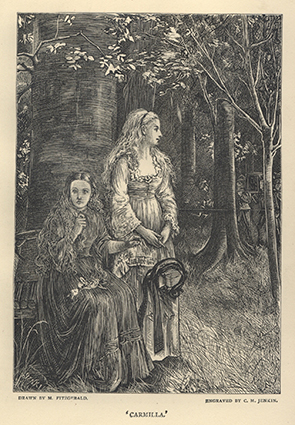
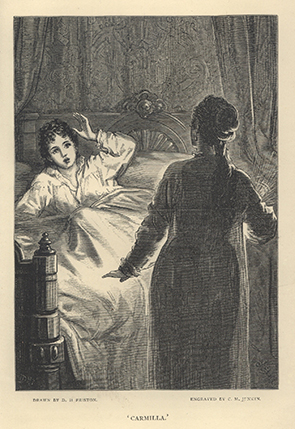
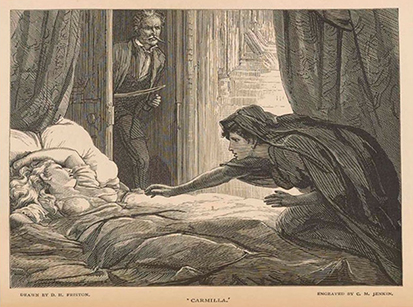
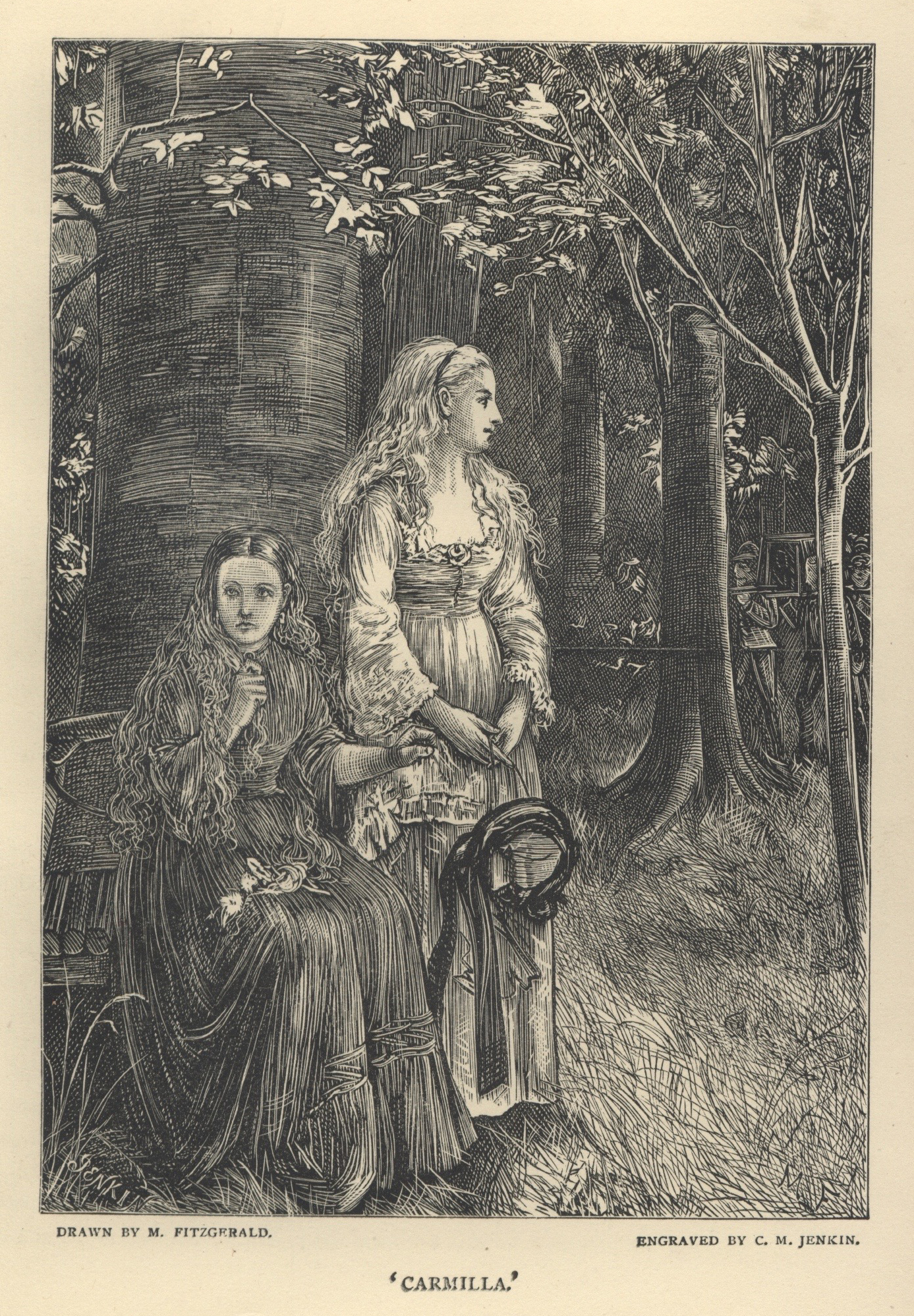
The Illustrated Carmilla
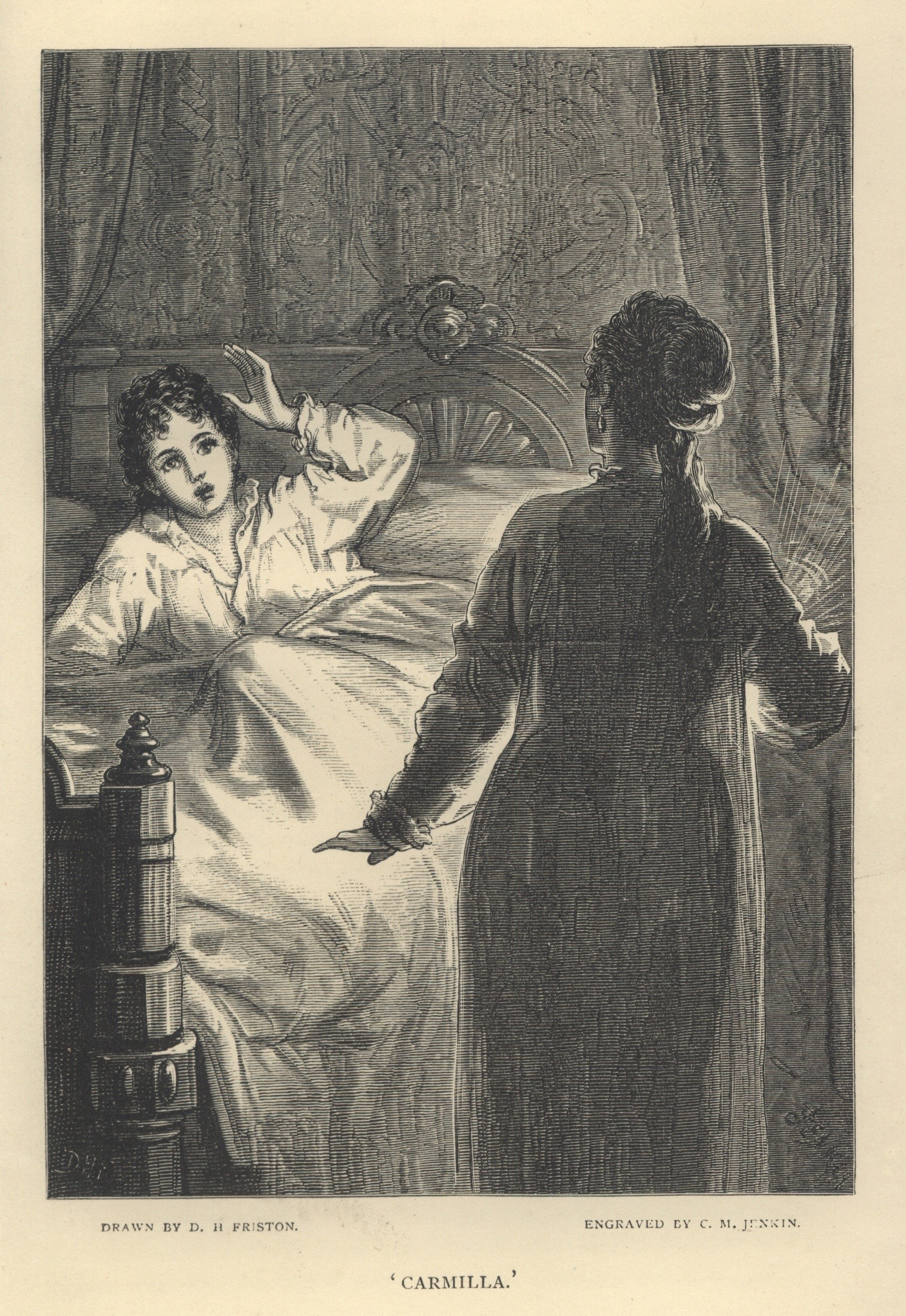
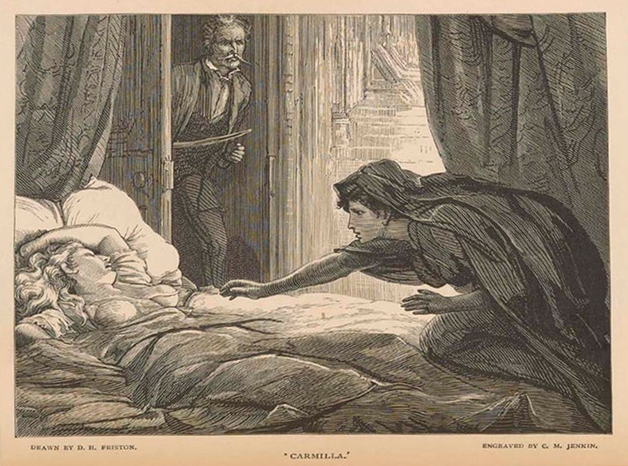
The first publication of Camilla was in the periodical, The Dark Blue from 1871 – 1982, which featured three illustrations by two artists, D.H. Friston and Michael Fitzgerald. I’ve reproduced those illustrations here in the order in which they appear in the text. Click on the links to see a larger version of each illustration in the context of an extract from the novel.