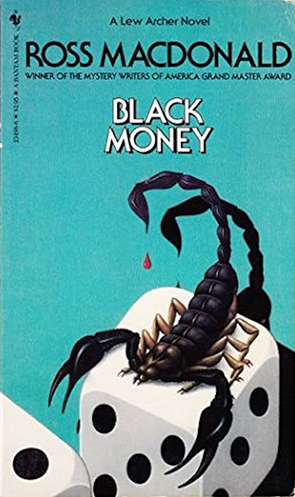
Lew Archer Series #13
- Category:Crime Fiction (Sunshine noir)
- Date Read:26 March 2026
- Year Published:1966
- Pages:238
- Verdict: The best from the best

Content warning! The novel is of its time and place and there is sexism, racism, ageism, meat-eating, smoking, and other hindsight sins in its pages.
An elegant Frenchman named Martel causes a stir at the exclusive Montevista (up the slope from the Apple HQ in Cupertino) Tennis Club, especially among the ladies in Ross Macdonald’s thirteenth Lew Archer novel, Black Money. One such lady is a very bright, very wilful, very beautiful college senior who drops out of school to while away days and nights with him, much to the chagrin of her pudgy boyfriend. Well, he thought of himself as her boyfriend. She thought of him, had she thought of him at all, as a neighbour.
This wannabe beau is Peter, and he hires Archer to investigate this Frenchman. Archer demurs because he realises that beau wants the girl, and that is not a job he can or will do. Still, Beau is persistent and background checks are meat-and-drink for Archer so he starts with Martel’s bank, the Club, the neighbours, and the woman who sponsored his application for club membership. He also talks to the man himself, and all in all, something does not quite add up, but there is nothing definite.
This jigsaw puzzle approach, starting from the edges, is not enough for Pudgy who insists that Martel is no Frenchman, at all! Zut alors! The way to reveal that is to test his Frenchness! No, not by a sly DNA test, but by a door stop pop quiz.
Pudgy Peter arranges for Archer to meet the professor of French at the local college from which beauty dropped out, and prof provides them with five questions to ask on the assumption that any Frenchman of this man’s ostensible social class and background would know the answers. This may all seem a bit silly, but there are dividends to come. Beaucoup!
In the background is the suicide of beauty’s father some years ago when his wife’s money ran out. As Archer noses around Martel, this earlier death keeps being mentioned. Ever so slightly Archer's focus pulls back a notch to include it . . . And that is when the bodies start falling.
Along the way a reader is treated to vintage Macdonald prose like the specimens reproduced below.
‘He looked like money about three generations removed from its source.’
At the tennis club they ‘play at being simple villagers the way courtiers of Versailles pretended to be peasants.’
‘A pale moon hung in a corner of the sky, faint as a thumbprint on a windowpane.’
‘She looked like she had stopped believing almost everything except the numbers on dollar bills.’
Click here to view more quotes
One of the goodreads opinionators says that there are no good lines in the book. Oh?
Archer meets and talks to a quite cast of characters, waiters, bar tenders, street homeless, an out-of-luck car salesman, the club manager, the receptionist at the club, aloof neighbours with old money in the attic, a tatty college professor and his harassed wife, still other professors, members of the club, grounds keepers, nurses, several police offices, another receptionist, a gardener, a busboy, a catatonic villain in a wheelchair, a maid, a hotel desk clerk, a waiter, and a medical doctor who should have healed himself. Among them are blacks, Hispanics, grifters, and plutocrats, and a few thugs. Some are cosseted alcoholics and others working stiffs with all points in between. Each of them is given a persona and personality however brief is their moment on the stage. By and large they are decent people. None are mere plot devices nor sounding boards for the author’s peeves.
I asked Dr Google how many characters in total appear in the corpus of Archer novels. Doc doesn’t know but it ventured to say ‘hundreds.’ I speculate that the total number rounds to a thousand.
As tangled and murderous as the stories can be, somehow Archer always emerges, if scathed, then sane. In one, after he draws his car into a lay-by in the Hollywood Hills in the night and sits ‘looking out over the city stretched like a luminous map to the [black] horizon [of the Pacific]. It was hard to pick up its ever-changing meaning. Its whorls and dots and rectangles of light had to be interpreted like an abstract painting.’ The quest is to find some meaning in that painting for clients but also for himself.
* * *
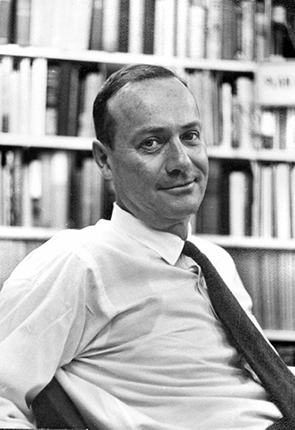
In a reflective mood Kenneth Miller (alias Ross Macdonald) has said that Black Money was the best of the Archer books. He said that, perhaps, because it reminded him of Scott Fitzgerald’s wistful tale of broken dreams in The Great Gatsby (1925) with its many memorable lines. The biggest broken dream in both cases is that the past is gone; that it can be left behind; that one can start anew, free of the past. Not so. It is a shadow that no one escapes.
According to legend Raymond Chandler read a pre-publication copy of Macdonald’s first Archer novel, The Moving Target (1949) and exercising his curmudgeonly rights, he dismissed its plot, its characters, and its prose. ‘Three strikes and you’re out!’ The plot was needlessly psychological. The prose was forced. The characters were too complicated. This was devastating to the young Macdonald, but he shrugged it off and kept on and on. This one is number thirteen (13) in the series of eighteen that ended in 1976 with his life.
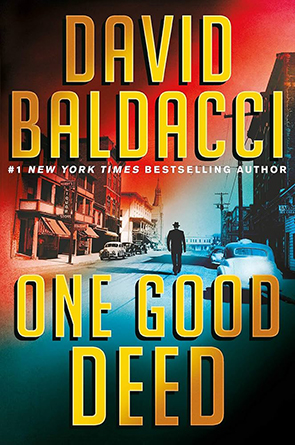
On the other hand, David Baldacci has paid an extended homage to Macdonald in his own Archer series kicked off with One Good Deed (2019).
On goodreads Jessica agreed with Chandler. Make of that what you will.
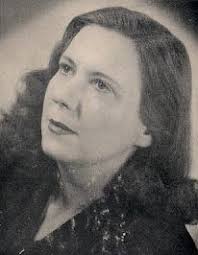
Aside: The author’s wife Margaret Millar was herself an author of distinction with more than twenty-five titles to her credit, many of them mysteries. Where his plots are fuelled by psychology, hers have a greater social dimension. Guilt, memory, shame, and other emotions explain events in the Archer novels, whereas social status, ascribed qualities, ambition, and achievements power hers. A list of her novels can be found here.

“. . . looking out over the city stretched like a luminous map to the horizon.”