- Category:Non-Fiction
- Date Read:23 December 2025
- Year Published:1975
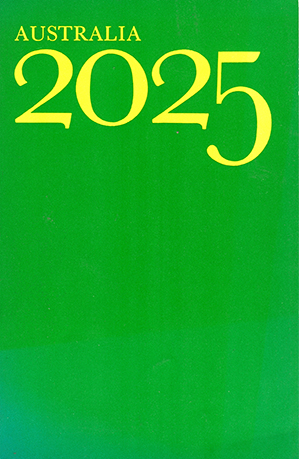
In this review Dr Michael Jackson appraises a now mostly-forgotten book by Roger Darvall and Morris Coath, Australia 2025. Produced in 1975, the book featured chapters from a series of authors that discussed different facets of Australian society and made predictions about them fifty years into their future. Dr Jackson gives an overview of these predictions, as well as an insight into what was thought in 1975 and how accurate those speculations actually were.
This is a rare book which you will have difficulty acquiring, especially if you live outside Australia. For this reason, Dr Jackson’s review is also a useful overview of the book, and a timely reminder that we can’t really know how the future will unfold.
The Context of Australia 2025
In Canto XX of The Inferno Dante had futurists with their heads on backwards walking forward around the fourth pit of the eighth circle of Hell. These fortune tellers, seers, and oracles were the futurists of their age. A timely example of such divinations is one edited by Roger Darvall and Morris Coath, called Australia 2025 published by the Electrolux Corporation which once promoted vacuum cleaners with the memorable slogan: ‘Nothing sucks like an Electrolux.’
In the 1960s and 1970s there were ranks of daredevils who risked Dante’s curse by looking into the future as futurism, futurology, and futuristics were the fashion de jour. Moreover, many who plied this dark art did not advertise it with such terms but nonetheless aped the practice while marching under other banners. In the prosperous optimism of the time the future seemed plastic, ready to bend to human will.
The igniters of this international blaze included Americans Hermann Kahn and Anthony Wiener with the Year 2000 (1967), Frenchmen Bertrand de Jouvenal’s The Art of Conjecture (1967) and Jacques Ellul’s The Technological Society (1967), another American Alvin Toffler’s famous Future Shock (1970), Canadian Stephen Clarkson, ed., Visions 2020 (1970), and Dutch parliamentarian Fred Polak with The Image of the Future (1973). A traveling Herman Kahn went down under and with Thomas Pepper offered the reading public Will She be Right? The Future of Australia (1981). By and large these explorers travelled light and alone, making no references to each other.
These efforts inspired government agencies to the task. The Swedish Foreign Ministry produced To Choose a Future (1974), while its chilly neighbour established the Finninstitute (1990) in Helsinki for a time. Elsewhere there came into being the Malaysian Foresight Institute and because anything Malaysia can do, Singapore had to do better, it established the Centre for Strategic Futures, while oil produced the Dubai Future Forum which met last in November 2024.
While the bulk of these prophecies were exhaustively and exhaustingly upbeat, Donella Meadows, et al., Limits to Growth (1972), in a data-rich study, sounded very deep and very dark tocsins of doom and gloom about the depletion of the earth upon which we stand. There were other gloom sayers, too, but let this one represent them in this tour d’horizon.
Homegrown seers included Fred Emery, Futures We’re In (1974), W. N. Holmes, Computer Aided Democracy (1974), Tony Newstead, ed., Telecom 2000 (1975), and John Tydeman and Robert Mitchell, Subjective Futures for Decision Making (1977). These prophets were abetted by Sol Encel, Pauline Marstand, and William Page in The Art of Anticipation (1975), a primer on the methodology of prophecy. Nostradamus is not mentioned in any of these solemn pages. A subsequent Australian Labor government provided a sinecure to one of its most formidable war horses with a study tour of the promised land of Sweden, where evidently the future was now, or rather then, that resulted in a report that might as well have been recycled at publication for all the impact it made, namely Australia Reconstructed (1986), which offered a blueprint to make Australia into a sandy and suntanned Sweden. In its trauma of birth this volume was called the Carmichael Report after that eponymous steed.
But long before that, strange as it may seem today, a private corporation invested monies in commissioning, editing, printing, and distributing a collection of papers discussing, at different levels, the future. Would any corporation today do that? What KPI would that satisfy? The Electrolux volume we know as Australia 2025 contains fifteen contributions, one by a woman, rather predictably for the time and place, on the arts. A decade later the Carmichael Report tourists numbered twelve men and, again, one woman.
Most contributors use some of their limited space to record their diffidence at predicting the future. The average length is 10-12 pages with a few longer and several shorter, each is headed by a page devoted to credentialing the author. The contributors range from corporate chiefs and parliamentarians to others in elevated position in the law, medicine, education, and so on. Impressive as many of these attainments are, their day is now past and what remains is the texts they offered. Since each prophet has a specific topic, the writers stick to that and in the absence of either a context setting introduction or a general conclusion, the reader is left to ponder how the pieces of this puzzle of the future might fit together.
How was it received way back then? Quietly. APAIS on Informit, a search engine on public affairs in Australia, yielded no references to it of any kind. Born of the real world of corporations it disappeared into the void. However, it remains available in 44 libraries across the country, according to WorldCat, and also the library of Ludwig-Maximilian University of Munich, which is curious.
Though time is infinite, according to Stephen Hocking, and maybe he knew, patience is not, and so this treatment is selective. Readers with a thirst for knowledge greater than mine will find Australia 2025 deep in the recesses of more than forty Australian libraries. Seek and ye shall find.
An Overview of Australia 2025
The authors of Australia 2025 were aware of the hubris of the exercise, and it is to their credit that they blunted their scruples and took a turn at the crease. There is also hubris in commenting on such a variety of subjects about which I know so little, but the aim is to stimulate interest not to draw conclusions. It is also clear that some authors did not risk a shot but repeated remarks that they had had occasion to make before about their field of activity.
Australia as a Place to Live
The opening chapter by Lloyd Robson from the University of Melbourne is titled Australia as a Place to Live. This chapter, intentionally or not, sets the scene for what follows, and in so doing it offers comments on a greater variety of subjects than the more specialized chapters that follow.
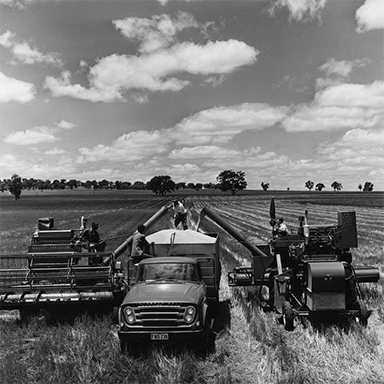
After declaring his uncertainty about predictions, Robson starts with a safe bet on the increased mechanization of agriculture, though allows that small farmers may continue to exist. He does not foresee the demand of late for specialty goods from pristine conditions. Small is beautiful to many consumers of such foods.
He also bemoans the lack of influence of pastoralists on government. A strange lament for at the time Jack McEwan had been the dominate force in the Coalition and its governments and his party often seemed to be a tail that wagged the dog of the Liberal Party, and at the very time of publication a pastoralist, Malcolm Fraser, was prime minister.
Robson enters some guarded remarks about immigration including this one: government can increase immigration ‘at the drop of a hat’ (5). That is the voice of someone who has never been embroiled in either the policy or practice of immigration. A timely reminder of these complications is detailed in Sheila Fitzpatrick’s White Russians, Red Peril (2021).
Historically, many migrants to Australia were indentured to work the land at least for a time. Even today backpackers supply the army of labourers needed for some harvests in a kind of auto-indenturing.
Robson also ventured to speculate that by 2025 Australia’s population would be 20 million from a 1974 population of 14 million, whereas the Australian Bureau of Statistics puts it at 27 million in 2024. This question of size and immigration relate to an ongoing debate about Big Australia that emerged in the 21st Century is unanticipated by anyone in this collection.
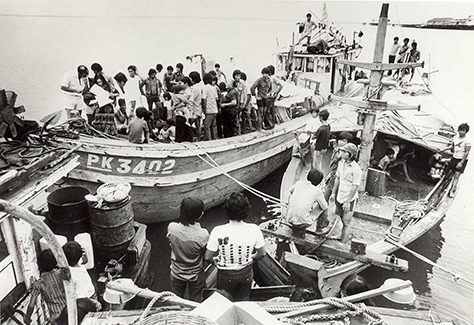
After these topics there is a shift of gears with a reference to Thomas Hobbes (p6), the sixteenth Century English writer who conceived of a state of nature rife with conflict. Robson introduces friend Hobbes with reference to the widening gap between rich and poor nations and the use of resources. For more on these themes see the Limits to Growth, because nothing in Australia 2025 concerns itself with this combination. Still less does it anticipate the flood of migrants moving from south to north.
Robson draws his own conclusions when he wrote that the imperative of necessity in a state of nature makes dictatorship a popular choice, attributing this sentiment to Hobbes. That leads Robson to ‘a long-term prediction . . . that authoritarian government will emerge in Australia’ on the political right (p7). On the page this outcome seems to be acceptable to Robson for no qualm or qualification is entered. It is with restraint that I make no comment about contemporary events elsewhere.
Other subjects are treated in single paragraphs, including the national symbols of the flag and anthem. He predicts new versions of each but makes no mention of the Republican sentiment that underlies these prospects. There are several paragraphs on automobiles and roads, with a tip of the hat to public transportation. There is a brief reference to Asian immigration as possible, but which would represent a profound change in society. Ahem. Look around.
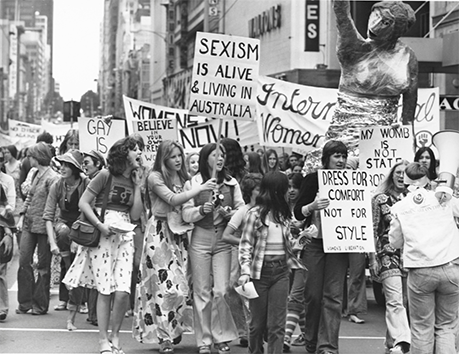
There are also left-handed references to the aspirations of aboriginals and women, but more space goes to the metric system, and, moreover, the terms ‘man’ and ‘men’ populate the pages of all contributors.
Natural Resources
After that invocation of Hobbes and the dark shadow of the state of nature where life is, per Hobbes, nasty and brutish, the next chapter concerns Natural Resources, and its author was Ian McLennan. It comments on oil reserves (p24) yet all but ignores the oil shock of 1973. But perhaps the manuscript was prepared before that seismic wave reached Bass Strait. In an aside McLennan anticipates one-time Liberal Party leader Peter Dutton by raising the prospect of nuclear energy without any details. The need for additional energy, a reader infers largely from silence, is not due to constrained resources but rather to increased demand, though he makes no mention of what was then called Mainland China as a consumer of resources (p27). In keeping with his tone this Babbitt makes no mention of recycling, reusing, or reducing consumption which have become a mantra by 2025. Solar and wind power were likewise invisible at the time.
Food and Agriculture
The most conspicuously credentialed futurologist in the collection is Frederick Emery whose chapter is on Food and Agriculture. His chapter is replete with data about calorie production and consumption in India, taken as an indicator of the rise of middle-class markets for food and other agricultural products in Asia and the Middle East. He, too, omits any emphasis on China. He also, hey presto, foresees a pressure to de-bureaucratize society as whole (p45). He did not reckon with the rise of management and the taxes of compliance it now imposes in so many spheres including food and agriculture. Nor does Emery anticipate what picky eaters we have become: vegans, vegetarians, gluten liberationists, lactose intolerants, ovo no-noes, anti-pescatarians, and many more. They are to be seen reading the labels in the produce aisles far and wide. In a parallel track are those who seek out pristine foods from remote mountains, oil free ocean waters, Arctic forests, and the like in specialty foods.
The Economy
The next stop is The Economy by John Bruner who, with an appropriate disclaimer of academic modesty, arrives at a projection of continued 5% growth, while dismissing as science fiction the dire observation in the pages of The Limits of Growth (p56). He mentions Mao’s China in passing but like all of us in 1975 he did not foresee its entry into the wider world by 2025. His crystal ball reveals a growth in the tertiary economy of services, but he does not mention higher education which has become a sizeable earner for Australia in the last two generations. One recent estimate suggests $50 billion in a calendar year, somewhat more than that generated by all sports in the country, according to some internet estimates. Yet governments continue to subsidise sports with facilities and to cut funding to education. Square that circle.
Foreign Investment
One of the shortest and, to be candid, least edifying chapters is on Foreign Investment by Charles Court who became a genius with the resources boom while premier of Western Australia. In these pages he declares, with a sideswipe at weak-kneed socialists in the Labor Party, that ‘I see the Australia of 2025 as a major industrial power, and as a very considerable world influence,’ exporting capital not just importing it. However, according to the Register of Foreign Ownership of Australia Assets the growth of foreign ownership has steadily increased in mines, gas, and property. Such investment has been wooed by both the national and state governments like that of Western Australia, for example, with the Hong Kong diaspora in 1997. The investors include Chinese mandarins and Arabian sheiks of the Middle East.
The Reserve Bank estimated that foreign holdings of Australian assets have risen from 70 to 130 per cent of GDP from 1980 to 2005, and that trend continues (Bulletin, April 2005). Specialists can elaborate but to this layman it seems Australia still imports capital. There is an HSBC paper that said Australia was a net exporter of capital in large part due to the spread of investments by superannuation funds. These funds developed greatly after the weak-kneed Hawke Labor government paved the way for them in the 1980s.
Communications
A chapter that will appeal to many readers today on Communications is by Eber Lane who emphasises new technologies bringing new services, including radio telephones linked to computers. Students, he foresees, will use computers and these will facilitate meetings and classes (pp76-77). Many of us will use these technologies to work and shop from home (pp76 and 80). Making all this magic happen will be optical fibre.
Chapeaux! Lane saw the future, though he did not anticipate social media and the eclipse of the heritage media (newspaper, television, radio) that we are now seeing.
In 1975 I would not have supposed any of this as I was using dumb terminals to run data on a huge mainframe without a telephone at home, as penurious as I was. More often than not, it was easier for me to use a slide rule. The computers Lane refers to are mainframes and not the handheld devices we all seem to have and cannot do without, today. Forget your phone in the morning and the day is ruined. He may not have realized the convergence of technologies enabled by the miniaturization of components, and the vastly increased efficiency of batteries of all kinds, but who did in 1975? Well, fortunately some scientists, engineers, and technicians did.
Transport
The following short chapter by Peter Ables concerns Transport. In it he emphasis the continued importance of ground transportation for goods, such as his companies offer, rather than by sea or air. A guess is that at the time a significant element of ground transportation was Australia Post, and now a great deal of that mail goes air domestically as well as internationally. Of course, most of it goes through the air waves, using the internet. He mentions nuclear energy but also wind and sun (p87). While there is no mention of electric vehicles, he does write that ‘a return of the airship is most likely’ (p87), because it uses little ground space. I do not know what to make of that remark. A reader will have to decide without my guidance. Good luck!
Education
We come then to a chapter on Education by Lawrence Shears. It sets the scene with a mention of Alvin Toffler’s Future Shock (1970) and goes on in the field of education to the polyglot and polymath Ivan Illich on de-schooling society, which was much in vogue at the time but has since vanished. Certainly, Illich’s argument that mass education was doomed to fail seems vindicated by the waves of anti-science and anti-intellectualism that swirl around us today. After 150 years of free public education in much of the European world our collective wisdom has not increased one scintilla. Just watch the news tonight for ample confirmation.
To return to the text, Shears refers to environmental education, though does not expatiate on that term, and says nothing about learning to reduce, reuse, and recycle that has become a mantra. As to teaching, and I assume he is thinking of elementary and high schools, not universities, he opines that it will become more difficult. Why? Because of the presence of migrants and because both parents are working (p94). The references are cryptic but perhaps he meant that there is a language and cultural dimension to teaching migrant children, though Australians surely had long practice at that by 1975. As to working parents, is that a comment on homelife? Or on women not staying at home? It is not clear. He also claims that ‘teachers’ organisations’ have created an antagonistic public climate’ (p 95). That seems to be a reference to union demands for pay and conditions. Oh hum, it was ever thus, the demands of others are unreasonable but mine are perfectly just. Moving on, when we consider the rise of national and international comparisons of education like the National Assessment Program in Australia and its comparative partners, that seems a development not anticipated in these pages.
However, Shears does note lifelong learning which has led both to further credentialling with ever more degrees and certificates, and the use of radio, television, video, and computers to change the classroom or even end it. That put me in mind of Wondrium and its counterparts as opposed to the programming of Channel 10. Wondrium is there but its share of viewers is no doubt far less than even that of fifth-rated Channel 10.
The Arts
Into these macho pages stepped Jean Battersby on Arts. This chapter opens with a reference to poetry, a pleasant relief from the material drum beating of earlier chapters. I had rather hoped she might quote that storied remark of poet A. D. Hope who, when challenged, aggressively, by a parliamentarian of a mind to curb public spending on frills and frivolities like poetry rather than agricultural subsidies, asked him, ‘What can poetry do for Australia?’ replied, ‘Sir, it can give it meaning.’ This rejoinder no doubt washed over the inquisitor, but it lives on in the minds of those who heard it.
Hope would certainly approve of Battersby’s remark about ‘The desperately vain ideal of many planners seems to be the all-stainless-steel surprise-free future’ (p100). Such a state would lose all creativity and the energy that both produces it and flows from it. As Bob Dylan and Taylor Swift have demonstrated, many thirsts can be quenched by the poetry of music.
Art communicates human emotion, experience, knowledge, hopes, fears, and the like among us and our kind. In the future, Battersby expected that the computer will offer limitless libraries of video, music, sports, art, and literature transmitted on cable for the computer will be as common as the refrigerator though it will cost as much as the family car (p101). That is a hit rate of 50%: right on ubiquity but wrong on cost. Alexa and Siri will control light, heat, entertainment and more in the home. Wow! She got that right. too.
Religion
One of the narrowest chapters is John McCaughey’s on Religion. It reduces religion to the Christian sects in 1975 Australia and delves into the negotiations among them over doctrine and dogma without a word on church attendance, census identification, or a nod to other religions beyond the Christian pale. There is nary a word on the ordination of women which was in the air in 1975.
Law
In the same class is John Norris’s pompous chapter on the future of the Law. It pivots on law by precedence or fiat but arrives at no easily discernable conclusion but rather is replete with caustic asides. For example, Norris notes that in 1975 there were more and more trials and that the trials were lasting longer. Apparently, that was an unwelcome situation which he attributes to legal aid when counsels are not restrained by cost (p133). One might have thought that was the point: to free defendants from the restraint of cost to achieve a just outcome. Moreover, every legal aid lawyer knew, if John Norris did not, that the budget was limited.
Social Welfare and the Standard of Living
David Scott addresses Social Welfare, opening on a dour note, having written that ‘It is difficult to be optimistic about the kind of society that may exist in 50 years’ time’ (p136). George Orwell, he continues, might have been right in general though wrong in the timing. This sombre beginning sets Scott apart from the Pollyannas that preceded him.
Scott notes the connection between the aging population of Australia and immigration to augment the labour force. The advent of the post-World War II welfare state is here to stay (p137). In these remarks he anticipates, even if unintentionally, the idea of Big Government taking on ever more responsibilities, and parallels the opposing forces of participatory democracy, so much in vogue then and now completely forgotten, with surveillance.
In this context Scott comments on the ‘artificially’ high standard of living that is increasingly the norm, and to maintain that elevated standard, we must continue to work, though he opines that the difference between the two – work and leisure – ‘may become blurred’ because there are many other reasons, apart from sustenance, to work: social contact, self-esteem, learning, a sense of purpose, identity, and, as Georg Hegel, a nineteenth century German philosopher, would say, objectification of the self. The chief blurring in 2025, however, is technology that has brought work into the home, a tendency accelerated, but not created, by the CoVid epidemic, far beyond the telecommuting once bruited in the 1990s.
There are also paragraphs on education and training facilitated by technology, the handicapped, pre-school and the family. In the end he refers to his hopes as utopian (p142), that is, impossible.
The early 20th Century’s promise of increased leisure has not been fulfilled (p 138), he wrote. Yet in another sense it has. Let us remember if he does not, that in 1900 a coal miner worked 72 hours a week in terrible conditions with accompanying injuries and death. Children 10 years old and younger worked in textiles factories a like number of hours. Women’s work at home was backbreaking and constant. We have all had relief from those toils. But Scott does not seem to have realized that. Yet doing the family laundry in 1950, largely by hand, from boiling the water to wash boarding and wringing out the clothes was far different from using a washing machine in 1975.
Mechanization has eased much rural labour as well, and many urbanites now work at a keyboard, not bent over a ledger in poor lighting perched on a wobbling stool like Bob Cratchit. Most employees have paid vacations and other benefits, including pensions (when they are not stolen by CEOs). Most of these changes would indeed seem utopian to Mr Cratchit.
One change Scott did not entertain arises from a reaction to Big Government and that was the Howard government’s effort in the 1990s to offload social welfare onto community groups, particularly churches, via service contracts, many of which have outlived that government. This move was accompanied by an enthusiastic deregulation of the fruits of these efforts in aged care, childcare, social welfare and the like. One result of this change is the homeless people we see on the streets. Another is the recurrent outrages at the abysmal treatment offered by aged and childcare providers.
Aborigines
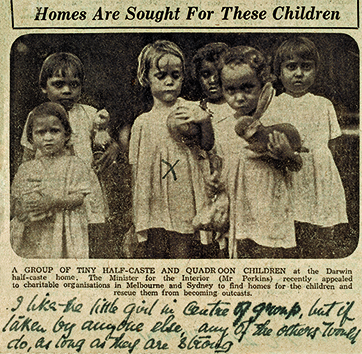
Neville Bonner’s chapter on Aborigines, admirably circumspect, is an historical overview with no discernable effort to look ahead to land rights (despite the 1972 legislation after a Royal Commission), or the cultural renaissance that Aboriginal Australia has had in the last two generations. It is noteworthy that he makes no comment about the practices of the time that were later documented in chilling detail in the Royal Commission Report Report of the National Inquiry into the Separation of Aboriginal and Torres Strait Islander Children from Their Families (1997). Circumspect, indeed. As always, hindsight is more accurate than foresight.
Medicine
Medicine is the subject of a chapter by Gustav Nossal which skirts any ‘way out’ (p164) assertions but considers the extensions of current efforts at preventative medicine, healthy lifestyles, screening using blood tests, increasing specialization among doctors and others, wholistic treatment and with that the integration of therapies. Some of these developments would be aided by technological developments. Smoking is only mentioned in passing but it became a major social change in the following decades. He could not foresee the anti-scientific hysteria that now infects medicine.
The Australian Home
The last chapter is The Australian Home by Roy Grounds. On the face of it, at the time, this would seem to be a subject for a woman to conjecture about domesticity ahead. However, this chapter might better have been called the ‘The Australian House’ because the focus is on architecture, and not the familial connotation’s borne by that word ‘home.’ Grounds stated that most Australian capital cities have already reached their population limit (p169). Yet the population of Sydney was then 3 million and now it is 5 million. Similar changes can be seen in the other capital cities. For example, Hobart’s population was 50,000 in 1975 and now several internet sources indicate it is 180,000. The cities have changed both laterally and vertically. (To be sure, city populations are partly a function of the boundaries assumed.)
Home ownership has also changed from a quarter acre block to a unit in a high-rise building, and more and more people rent rather than buy. These and other social dimensions of houses and home were beyond the horizon of Grounds’s essay. This is the last essay in the book.
There is no concluding summation. Nor can any assessment be found on the internet. In fact, the Carmichael Report returns more hits that Australia 2025, which some will score that as ‘1’ for labour and ‘0’ for corporate.
***
Peering into our own future
Reader, what would you say today if commissioned to peer into the future of 2075? Today’s preoccupations become tomorrow’s prognostications. Would the list include:
- A reckoning with climate change;
- No mea culpas from climate change deniers;
- Energy sources in wind, sun, and (tidal) water;
- The pride of LGBTQ;
- Further development of A.I., some of it insidious, including surveillance (Siri and Alexa will have evil twins and plenty of them);
- An ever-older, if not wiser, population;
- A declined birth rate;
- Will the clock will go back for women, aborigines, and others;
- Continuing debate over Big Australia as Australia gets bigger;
- The Republican impetus will recur;
- Foreign ownership, much of it Chinese and Arabic, will increase;
- Chinese social, cultural, and economic influence will be irresistible;
- The American defence umbrella will leak and pressure increased defence spending and Australia may find itself alone;
- The revolt against the Enlightenment will spread to these shores;
- Will such changes push New Zealand closer to Australia.
In conclusion, this collection reminded this reader of another futurologist from the 1970s, namely Stanislav Lem of Poland and his mile-a-minute science fiction parable The Futurological Congress (1971), part of which is set in the world of year 2039 where hallucinatory drugs have replaced reality.
Read today that sounds like Reality TV in a pill. But the real insight Lem slipped into this kaleidoscope was ‘mascon’ which was the systematic disguise of reality with fiction via media, miseducation, drugs, and, well, just about everything. We seem to have achieved that state of affairs sooner than 2039.
Australia, Then and Now
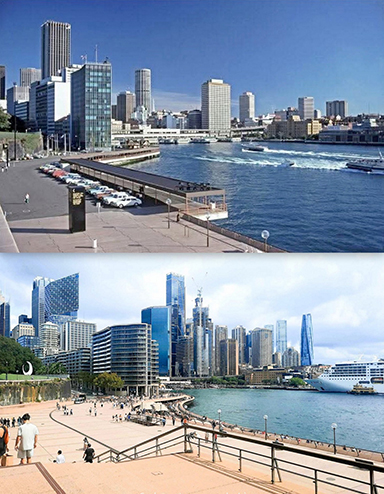
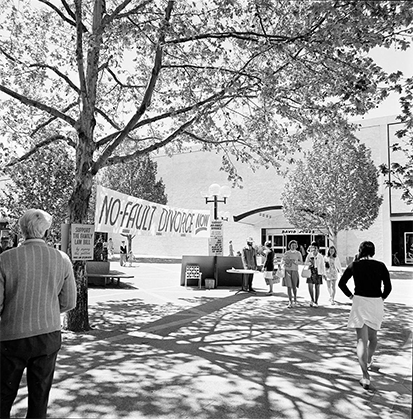
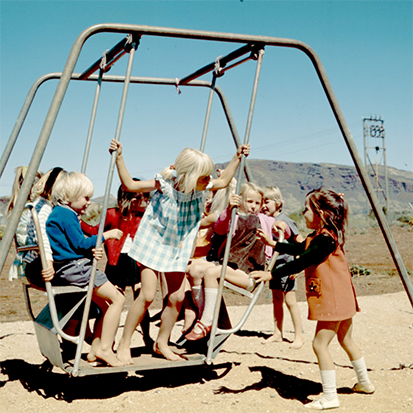
1975 and the 1970s in general saw significant changes to Australians and their way of life. The following is a small selection that hints at the political and social changes of the period.
Social Change

Political Change

Race